
Children's Alarm Clocks with Night Lights: A Guide to Choosing the Right One
A child who wakes up at five in the morning doesn't read the time. He opens his eyes, sees whether it's dark or light out, and draws his own conclusion. That's the whole problem that a nightlight alarm clock solves, and that's why it's bought differently than an adult alarm clock.
This guide summarizes what we’ve seen in our stores and over the phone over the years. Which device is best for which age group, what really matters in the specs, what’s just marketing hype, and the models we actually have in stock today. The prices listed are those shown on the product pages as of the date of this update.
At what age should you give a child an alarm clock?
There is no set age; rather, there are different stages of use. Before the age of three, the device serves mainly as a nightlight. The child cannot yet tell time, but quickly learns to associate a soft light with being allowed to stay in bed, and total darkness with what makes him or her anxious.
Between the ages of three and six comes the time when an alarm clock really comes in handy—when children wake up way too early. The child is independent; he gets out of bed, and the whole house wakes up with him. That’s when the color-coding system makes all the difference, because it provides instructions that the child can understand even without knowing how to read or count.
Starting at age six or seven, school requires children to wake up at a certain time, and they learn to read the hands. The watch then takes on a new role—it becomes a real alarm clock—and an analog dial becomes an educational asset rather than a complication.
Alarm clock, nightlight, or both
All three categories exist, and they don't serve the same purpose. A simple alarm clock rings—that's all. A nightlight provides light—that's all. An alarm clock/nightlight does both, and most importantly, it combines the two functions, which is the real benefit.
The question to ask yourself before buying is what problem you’re trying to solve. If your child is afraid of the dark but sleeps until 7 a.m., a nightlight is enough. If they sleep well but wake up before everyone else, a color-coded alarm is what you need. If you have to drag them out of bed every school morning, a standard alarm clock will do the job for a third of the price.
Buying a device with ten functions when you'll only use one is the most common—and most expensive—mistake.
The Five Criteria That Really Matter
The Color Code for Sunrise
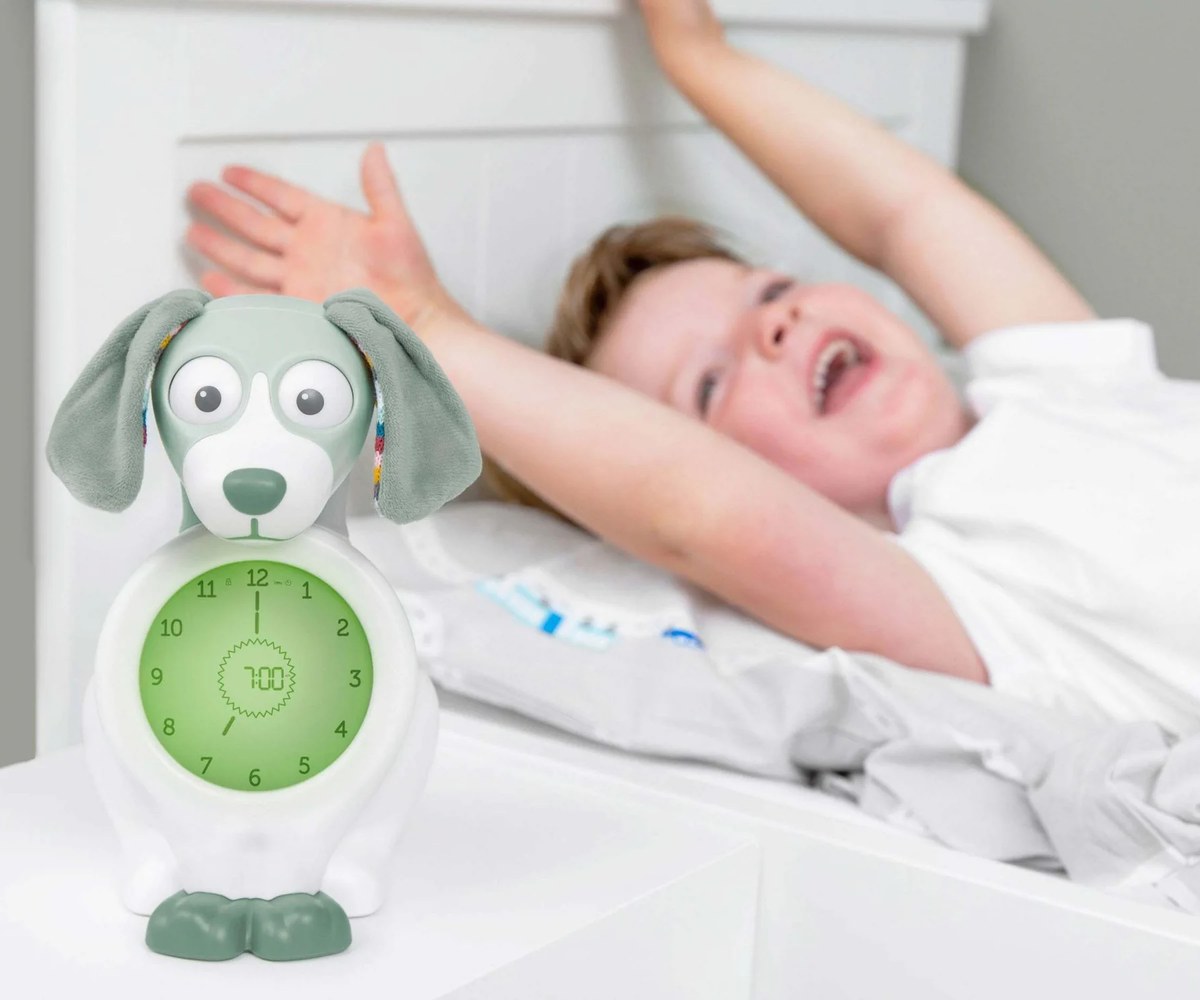
This feature alone justifies the entire category. The dial turns red when it’s time to sleep, yellow when it’s almost time to wake up, and green when the child is allowed to get up. No ability to tell time is required. On Zazu models, the character even closes its eyes at night and opens them in the morning—a feature that appeals to a two-year-old just as much as it does to a five-year-old.
The intensity of light, and its ability to dim
A nightlight that’s too bright keeps you awake, while one that’s too dim isn’t reassuring. The real factor, then, isn’t brightness but adjustability. Look for a device that offers multiple settings rather than a single switch. The Zazu models offer four settings, and the TVC-80 is adjusted with buttons.
Volume and ringtone type
A child may have a hard time waking up to a shrill alarm. Having several alarm tones to choose from is better than just one, and adjustable volume prevents the alarm from startling the child awake. The TVC-80 offers five alarm tones and two alarms, making it easy to distinguish between school days and weekends.
Power: Battery or Rechargeable
It’s the little things that ruin a gift. A battery-powered device runs out of power on the very night the batteries aren’t in the box. A device that charges via a cable requires an outlet near the bed. Billy Clocks charge via a cable and last about fourteen hours on a single charge. Zazu clocks run on three AA alkaline batteries, which aren’t included—so be sure to get them before Christmas morning.
Readability: Numbers or Hands
A digital display can be read without any training, while an analog clock requires practice. For a child starting school, learning to tell time on an analog clock becomes a free daily exercise. Zazu watches offer both options, allowing children to switch between them at their own pace.

Our selection of children's alarm clocks in stock
All of the models listed below were in stock at the time this guide was updated. Quantities of some items are low, and we'd rather let you know that now than have you find out once you've added them to your cart.
For a child who wakes up too early
Davy the Dog
This is the most feature-rich device in the selection and the most popular. The dial changes from red to yellow to green, and Davy opens his eyes when it’s time to get up. It stays with the child for a long time, serving as a nightlight for toddlers and then as an alarm clock for school-age children. It runs on three AA batteries, which are not included. Please note: only one unit remains.
View the listing →Bobby the Bear
It uses the same logic for nighttime indicator lights, with adjustable brightness and a choice of 12- or 24-hour display. It’s 15 euros cheaper than Davy for a wake-up feature that’s very similar. Here, too, there’s only one left.
View the listing →For a child who is afraid of the dark
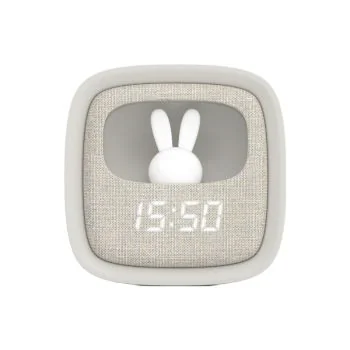
Billy Clock Rose
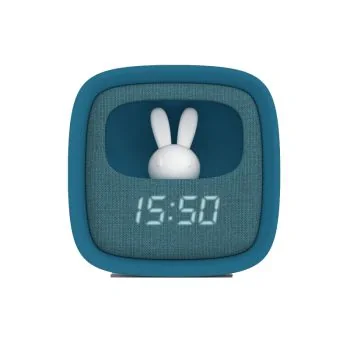
By far our best-selling model. The touchscreen lets a four-year-old turn it on by themselves in the middle of the night—which is exactly what we want them to do. It has three alarms, lasts about fourteen hours on a single charge, and is made of silicone that can withstand being dropped from the edge of the bed.
View the listing →Billy Clock Caramel
It has the same features as the pink model. The caramel color works better in a room that isn't decorated in pastel tones, and that's often what parents of slightly older children are looking for.
View the listing →The Billy Clock is also available in turquoise, gray, and marshmallow pink, with the same features and shorter lead times.
For a room that’s no longer a child’s room
TVC-80
This miniature TV entertains children and is stylish enough for a teenager—which is rare in this category. It features an adjustable nightlight, a motion sensor that turns it on with a single gesture, and displays the time, date, and temperature on the same screen. It’s the best-equipped model in the selection.
View the listing →Pastel Pink Cutie Clock
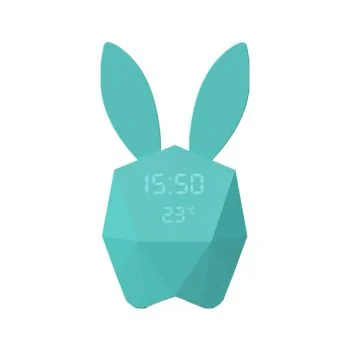
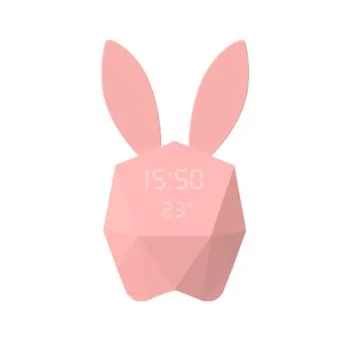
Children ages five to eight really love this character with ears. The motion sensor means you don't have to fumble for a button in the dark, and the magnet on the back lets you attach it to a metal surface instead of having it take up space on the nightstand. Also available in pastel blue.
View the listing →For a first alarm clock, or on a tight budget
Medium Blue Oval Alarm Clock
A real analog clock for the price of a book. The quartz movement is silent—which matters more than you might think in a child’s bedroom—and the light button lets you tell the time at night without turning on the room light. It’s the perfect choice for learning to tell time without breaking the bank.
View the listing →Unicorn Grand Wake-Up
It's the same mechanism as the previous one, but in a larger size and with a design that's sure to impress a six-year-old. There's also a soccer version and a more understated black oval version for shared rooms.
View the listing →The simple alarm clock that never breaks down
TQ-140-1BEF
When a child needs nothing more than to be woken up on time, this alarm clock gets the job done for the price of a toy. No night light, no color-coding, no settings to figure out. For a teenager’s bedroom or a vacation home, it’s often the most sensible choice.
View the listing →The lineup then moves up to the TQ-218-8EF, the DQ-747-8EF, and the TQ-369-7EF, which feature larger dials and more refined finishes.
The Comparison at a Glance
| Model | What sets it apart | For what age group? | Price |
|---|---|---|---|
| Davy the Dog | Red, yellow, and green color coding; hands and numerals | Ages 2 to 8 | 59,99 € |
| Bobby the Bear | Color-coded, adjustable volume | Ages 2 to 8 | 44,99 € |
| Billy Clock Rose | Touch-sensitive night light, three alarms, rechargeable | Ages 3 to 8 | 39,00 € |
| Billy Clock Caramel | Same, caramel color | Ages 3 to 8 | 39,00 € |
| TVC-80 | Retro, five ringtones, temperature | Ages 7 and up | 39,90 € |
| Pastel Pink Cutie Clock | Rabbit, motion detector, magnet | Ages 5 to 9 | 39,90 € |
| Medium Blue Oval Alarm Clock | Hands, silent quartz | Ages 6 and up | 12,90 € |
| Unicorn Grand Wake-Up | Needles, unicorn pattern | Ages 5 to 9 | 16,90 € |
| TQ-140-1BEF | A simple and reliable alarm clock | Ages 8 and up | 11,90 € |

An alarm clock or a watch, to learn how to tell time
Many parents are looking for an alarm clock, when what they really need is a way to teach their children to tell time. The analog clock on the nightstand works in the morning and at night, while the watch works all day long. The two complement each other rather than replace one another.
For this specific purpose, an educational watch like the Djeco Ticlock separates the hours from the minutes onto two distinct dials, which clears up the confusion that stumps most children. It is water-resistant up to three atmospheres, and its fabric strap can be adjusted to fit a six-year-old’s wrist. There is only one left.
If this is the category you're interested in, our children's watches section has more options, our selection of children's watches features additional choices, and our gift guide by budget covers ages beyond elementary school.
The Four Mistakes That Ruin a Gift
Don't forget the batteries. They're the number one cause of disappointment on the morning of December 25. Check the power cord before wrapping the gift, and buy a pack of batteries at the same time you buy the device.
Don't choose based on design alone. A fun shape doesn't solve any sleep problems. If a child wakes up at five o'clock, it's the color-coding that matters, not a cute design.
It’s too complicated for their age. A device with eight buttons will be set up by the parents once, only to be messed up by the child within a week. For children under five, touchscreens and motion sensors are better than a control panel.
Put the alarm clock out of reach. A nightlight alarm clock should be within reach from the bed; otherwise, the child will get up to turn it on, and the device will work against you. Make sure there’s an outlet next to the bed for rechargeable models.

What Is No Longer Available
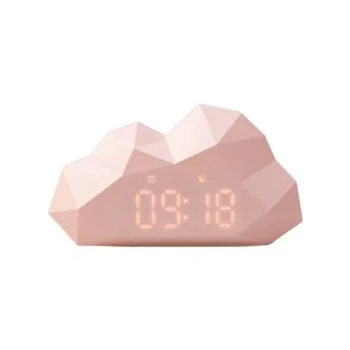
The Mini Cloudy shoes from Mobility on Board, which were among our best sellers in this category, are no longer available. The manufacturer has permanently discontinued the pink color, so we won't be seeing it again. The turquoise color is out of stock, and we're waiting for a restock, though we can't give a definite date.
If that's the format you're looking for, the Billy Clock offers the same features plus a nightlight, and the TVC-80 provides the same digital display in a larger case.
You can browse the entire section from the " Clocks and Alarm Clocks" page; the simplest models are grouped under " Alarm Clocks," and gift ideas for children can be found under " Christmas Gifts for Kids."
If you're still deciding between a few options, the TVC-80 is currently the best-stocked model, and the pink Billy Clock is the one we replace most often on our shelves.
Frequently Asked Questions About Children's Alarm Clocks
At what age should you give a child an alarm clock with a night light?
Children as young as two can use the nightlight feature and the color-coded wake-up system, which do not require them to tell time. An alarm clock in the traditional sense becomes useful around ages six or seven, when school requires a set wake-up time.
How Does the Color-Coding System on a Nightlight Alarm Clock Work?
The dial glows red at night, yellow as sunrise approaches, and green when the child is allowed to get up. The child understands the instructions without knowing how to read or count. On Zazu models, the character also closes its eyes at night and opens them in the morning.
Does a nightlight alarm clock help a child who wakes up too early?
That is precisely the problem it solves. A child who wakes up at five o’clock doesn’t know whether it’s early or late; all they see is that it’s dark. A light indicator gives them an immediate answer and prevents the whole household from waking up with them.
Should it have an analog or digital display?
Numbers can be read without any training, but telling time with hands takes practice. For a child starting school, a clock with hands placed on the nightstand becomes a daily exercise. Some models feature both displays at the same time.
Do the batteries come with a children's alarm clock?
Rarely. Zazu models require three AA alkaline batteries, which are not included. The Billy Clocks from Mobility on Board are rechargeable via a cable and last about fourteen hours on a single charge, which eliminates that issue.
How much should you budget for a children's alarm clock?
A basic analog alarm clock starts at around thirteen euros. A touchscreen nightlight alarm clock with multiple alarms costs around forty euros. Models with full color-coding, a dual display, and brightness control can cost up to sixty euros.
Does the nightlight stay on all night?
It depends on the model and the setting you choose. The key factor isn’t the brightness of the light, but the ability to adjust it. A nightlight that’s too bright keeps you awake, one that’s too dim isn’t reassuring, and only a device with multiple brightness levels lets you find the right balance.
Is a children's alarm clock loud?
The quartz movements in the analog models we offer are silent, which is important in a bedroom. When it comes to the alarm, choose a clock that offers several melodies and adjustable volume rather than a single, startling ring.
Share this content