
In summary: Club de la Montre is a French watch retailer that has sold more than 3,000 watches since 1968. To choose the right watch size, measure your wrist circumference and follow this guideline: a wrist circumference of 14 to 16 cm calls for a case size of 28 to 34 mm; 16 to 17 cm for a case size of 34 to 38 mm; a 17–18 cm wrist circumference calls for a 38–41 mm case, and a wrist circumference over 18 cm calls for a 42–46 mm case. However, diameter alone isn’t enough: lug-to-lug width and thickness determine actual comfort.
That’s by far the question we’re asked most often in the store. A watch that looks stunning in a catalog can appear ridiculous or overwhelming once it’s on your wrist, without you understanding why. The answer comes down to three factors, and one of them is almost always overlooked.
Of the 1,233 watches in our catalog for which the case diameter is documented, sizes range from 26 to 52 mm. The most common diameter is 40 mm, with 183 models, followed by 43 mm (111 models) and 39 mm (85 models). In other words, the bulk of the market is concentrated between 38 and 44 mm, which may not suit everyone.
Step 1: Measure your wrist circumference
Take a tape measure and wrap it around your wrist, just below the protruding bone, where the watch naturally sits. Tighten it without squeezing the skin. Write down the measurement in centimeters.
Don't have a flexible measuring tape? Use a strip of paper two centimeters wide, mark the overlap point with a pen, and then measure the strip flat against a ruler. That's accurate enough.
A helpful guideline: In France, a woman’s wrist typically measures between 14 and 17 cm, while a man’s wrist measures between 16 and 19 cm. These ranges overlap significantly, which explains why the distinction between men and women is far less relevant than the measurement itself.
Step 2: The Lookup Table
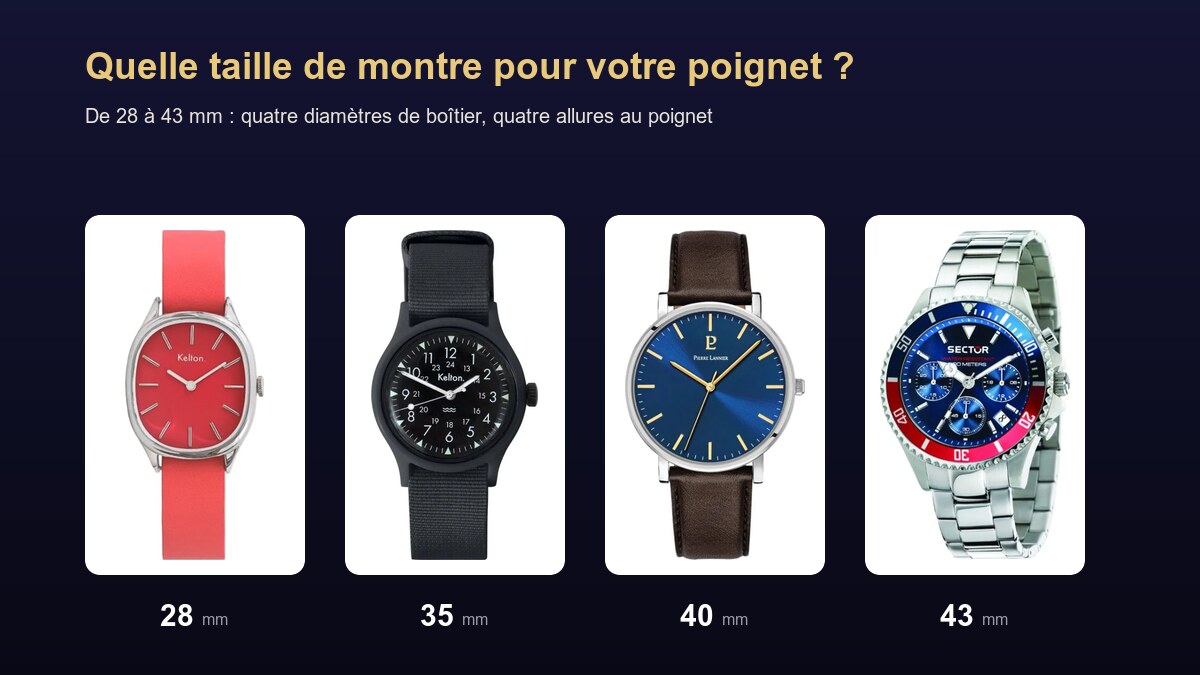
| Wrist circumference | Recommended diameter | Here's the result |
|---|---|---|
| 14 to 15 cm | 26 to 32 mm | Slender wrist. If the wrist is wider than 34 mm, the case will stick out. |
| 15 to 16 cm | 30 to 35 mm | The most comfortable area for a small wrist. |
| 16 to 17 cm | 34 to 38 mm | Neutral ground, where the two catalogs intersect. |
| 17 to 18 cm | 38 to 41 mm | The heart of the market. A very wide selection. |
| 18 to 19 cm | 40 to 44 mm | Chronographs and diver's watches have their place. |
| 19 cm and larger | 43 to 46 mm | Anything over 46 mm qualifies as a statement watch. |
These ranges overlap intentionally. A 17-cm wrist can accommodate both a 36-mm vintage watch and a 41-mm sporty watch just fine: it’s as much a matter of style as it is of geometry.
Step 3: The Three Criteria That Diameter Doesn't Tell You
The inter-horn distance: the forgotten criterion
The lug-to-lug width is the distance between the two ends of the lugs—the parts that attach to the watchband. It is this measurement, not the diameter, that determines whether the watch will extend beyond your wrist. The rule is simple: the lug-to-lug width should never exceed the width of the widest part of your wrist.
In practical terms, two 40-mm watches can have lug-to-lug measurements of 46 mm and 52 mm. The first will fit perfectly, while the second will stick out. This is the number one reason for failed purchases.
Thickness determines the intended use
At under 10 mm, a watch slips effortlessly under a shirt sleeve: this is the dress watch size. Between 10 and 13 mm, it remains versatile. Above 13 mm, the watch catches on sleeves and becomes a weekend accessory—which is perfectly acceptable for a diver’s watch or a chronograph.
The strap width matches the case
A good rule of thumb is to choose a strap width that’s about half the case diameter: 18 mm for a 36 mm case, 20 mm for a 40 mm case, and 22 mm for a 44 mm case. We’ve dedicated an entire guide to this topic in our article on strap width.
Men, Women: A Distinction That Is Fading
For a long time, the market has pitted 40 mm and larger watches on one side against 28- to 34-mm models on the other. That distinction has largely disappeared. The return of 34- to 38-mm sizes—worn interchangeably—is the clearest trend of recent years, and it mirrors what the watch industry was producing in the 1960s.
Our tip: Go by your wrist size, not the diameter. You'll find excellent styles in both our women's and men's watches, and classic watches are the ones that best bridge that gap.
Our selection, by size
Narrow wrist: 28 to 32 mm

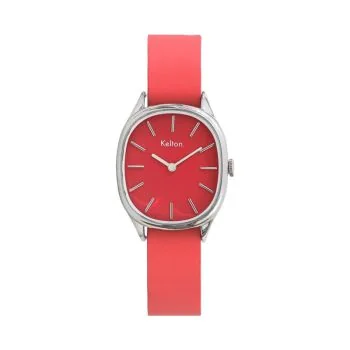
Kelton
Kelton Vintage Watch - Colorama Red
28 mm
Vintage cushion-shaped case, very discreet when tucked under a sleeve.
95 €

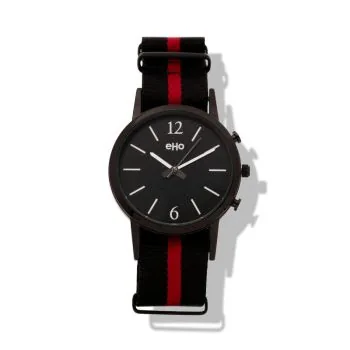
eHo
Lignon Eco-Friendly eHo Watch
30 mm
Eco-friendly wood; lightweight and slim on the wrist.
79 €
Average wrist size: 34 to 38 mm

Kelton
Kelton Watch - Jungle Carbon
35 mm
Field Watch format: the most versatile option.
85 €

Nixon
Nixon Watch - Time Teller - Black
37 mm · 9 mm thick
The minimalist Californian icon—clear and sleek.
140 €
The core market: 38 to 41 mm

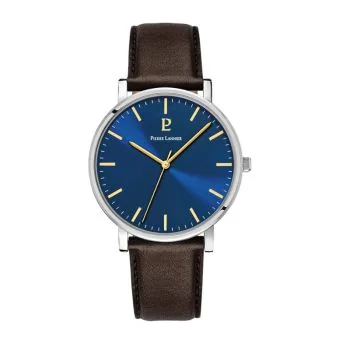
Pierre Lannier
Pierre Lannier Watch - Essential - Blue Dial - Marro Leather
40 mm · 9 mm thick
Only 9 mm thick: it fits under a shirt.
90 €

eHo
eHo Eco-Friendly Larch Watch
39 mm
Light-colored wood; very lightweight despite its diameter.
79 €
Wide wrist: 42 mm and larger

Sector
Sector 230 Watch - Chronograph - Blue and Red
43 mm
An easy-to-read chronograph with a bold presence.
199 €
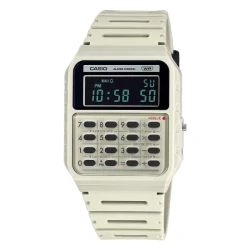
Casio
Casio Vintage Heritage Colors Retro Calculator Watch in Ivory
43 mm · 15 mm thick
Vintage calculator—wide but flat and lightweight.
60 €
Frequently Asked Questions
How do you measure your wrist circumference for a watch?
Wrap a tape measure around your wrist, just below the protruding bone, without pulling it too tight. Read the measurement in centimeters. If you don't have a tape measure, use a strip of paper—mark it with a pen, then measure it flat against a ruler.
What watch diameter is best for a 17-cm wrist?
A 17-cm wrist comfortably accommodates a case measuring 38 to 41 mm. This is the most common size on the market: in our catalog, 40 mm is the most common diameter, with 183 models. A 36-mm vintage watch is still perfectly wearable if you prefer a more understated look.
What size watch is best for a woman?
It depends on the wrist, not on gender. For a wrist circumference between 14 and 16 cm, aim for 26 to 34 mm. For a wrist circumference between 16 and 17 cm, 34 to 38 mm is ideal. Many women today wear watches with cases measuring 36 to 40 mm—a size that was historically considered masculine but has since become unisex.
Is a 40-mm watch too big for a small wrist?
Not necessarily. It all depends on the lug-to-lug length—the distance between the lugs that hold the strap. A 40-mm watch with a short lug-to-lug length (around 45 mm) will fit well on a 16-cm wrist. A 40-mm watch with a lug-to-lug length of 52 mm will stick out. Check this measurement before checking the diameter.
What is the lug spacing on a watch?
The lug-to-lug distance is the total distance between the tips of the two pairs of lugs. It determines how much space the watch actually takes up on your wrist. Rule of thumb: it shouldn't exceed the width of the top of your wrist; otherwise, the watch will stick out into thin air.
How thick can a watch be to fit under a shirt sleeve?
At less than 10 mm, a watch slides effortlessly under a sleeve. Between 10 and 13 mm, it remains versatile. At over 13 mm—typically dive watches and chronographs—it catches on the fabric and is better suited for casual wear.
What is the ideal strap width for a 40-mm case?
Aim for about half the diameter—that is, 20 mm for a 40-mm case. This ratio provides the most balanced look. A narrower strap makes the watch look sleeker, while a wider strap gives it a sportier look.
Do unisex watches really exist?
Yes, and it is currently the most dynamic segment. Cases ranging from 34 to 38 mm are suitable for the vast majority of wrists, for both men and women. In fact, this was the standard size in watchmaking during the 1950s and 1960s, and it has made a strong comeback.
To learn more, our guide to automatic watches provides details on the movements, and you can filter our entire collection of watches by brand and budget.