
The Club Guide
Changing the watchband is the easiest and cheapest way to give a watch a new look. But you still need to order the right width the first time. Here’s how to measure it, what each material is worth, and how to replace it yourself in five minutes.
The Essentials in 30 Seconds
- The width is measured between the lugs of the case, not on the strap.
- It is almost always an even number: 18, 20, or 22 mm in most cases.
- No leeway: even a one-millimeter difference, and the bracelet won't fit.
- You can change it yourself in 5 minutes using a pin-style tool.
Width is the distance between the horns
This is the most common mistake: people measure the bracelet instead of the watch. However, most bracelets taper toward the clasp. A bracelet sold as 20 mm may be only 16 mm at its end. The only measurement that matters is the space between the two lugs of the case, where the bar fits.
Here's a tip if you don't have a ruler that's precise enough: the width is sometimes engraved on the back of the original strap, followed by a second number that corresponds to the width at the buckle. A "20/16" marking means 20 mm at the lugs.
Common widths
Of the 1,000 bracelets and watches in our catalog for which the width is listed, the distribution is very concentrated:
| Width | For what type of watch | Frequency Here |
|---|---|---|
| 14 mm | Women's watches, small cases ranging from 28 to 34 mm. | 112 references |
| 18 mm | Classic and dressy, with case sizes ranging from 34 to 38 mm. | 97 references |
| 20 mm | The most common. Case sizes range from 38 to 42 mm. | 297 references |
| 22 mm | Bold men's watches, diver's watches, chronographs. | 157 references |
| 24 mm and larger | Large cases and military models. | 48 references |
Odd widths do exist—notably 19 and 21 mm—but they remain rare, and the selection is significantly more limited.
Which Material for Which Purpose
| Subject | Strengths | Limitations |
|---|---|---|
| Leather | The most elegant pieces develop a patina over time. | Do not expose to water, sweat, or sunscreen. |
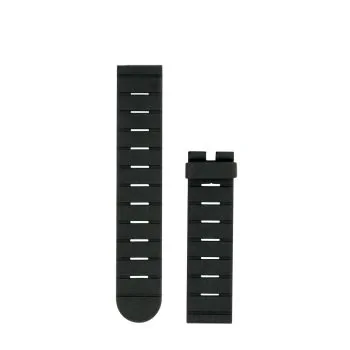
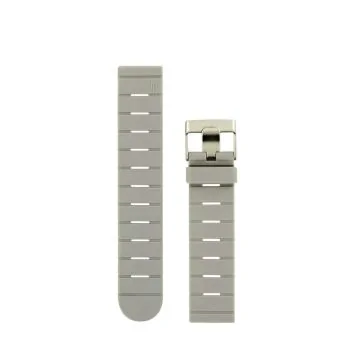
| Rubber, silicone | Water-resistant, rinse-off, ideal for summer and sports. | Less elegant on a dress watch. |
| Steel | Durable, can be worn year-round. | Heavier; heats up in the sun. |
| Milanese link bracelet | Flexible, adjustable to the millimeter, and very elegant. | May snag delicate clothing. |
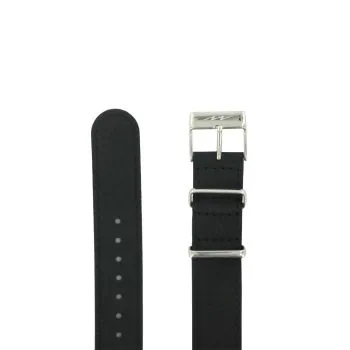
| NATO, fabric | Dries quickly, changes in a flash, inexpensive. | Lift the watch slightly off your wrist. |
Our catalog clearly favors leather, with more than 560 styles, ahead of steel and Milanese mesh. For summer, it’s best to look into rubber and NATO straps, for the reasons detailed in our summer care guide.
How to Change Your Watch Band in Five Minutes
The bracelet is held in place by a spring bar—a small metal rod whose ends snap into the holes in the lugs when pressure is applied. The spring bar tool, which is often included with the bracelet, is used to compress this spring.
Always check that the clasp is securely locked on both sides by gently pulling on the strap. A clasp that isn't properly secured will usually come loose within a few days, causing the watch to fall off.
Some watches are exceptions to this rule: models with integrated bracelets, where the bracelet design extends from the case, and those with proprietary clasps. In these cases, you’ll need to go through the brand or a watchmaker.
Our selection by width
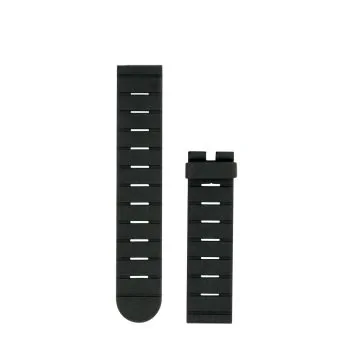
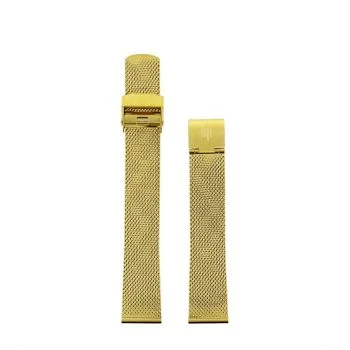
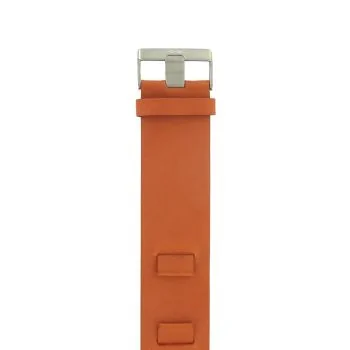
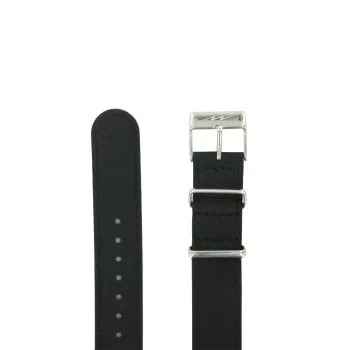
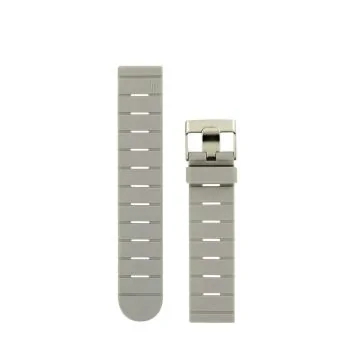
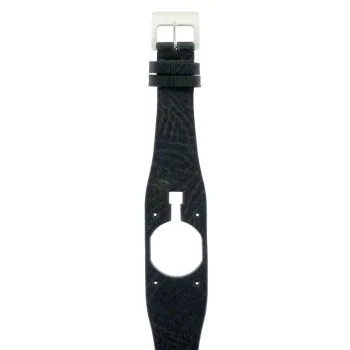
Check out our entire selection of watch straps, or browse our men's and women's watches if you're looking for a complete watch instead.
Frequently Asked Questions
How do I find out the width of my watch band?
Measure the distance between the two lugs on the case—where the band attaches—not the width of the band itself, which often tapers toward the clasp. Take the measurement in millimeters using a ruler or caliper. The resulting value is almost always an even number: 18, 20, or 22 mm in the vast majority of cases.
What happens if I choose the wrong width?
A strap that is too wide will not fit between the lugs. A strap that is too narrow will fit but will have visible slack on either side, and the watch will move around on the wrist. There is no tolerance: the width must match exactly, to the nearest millimeter.
What are the most common widths?
The 20 mm size is by far the most common, followed by the 22 mm on men’s watches with large cases. The 18 mm is common on classic models, and the 14 mm on women’s watches. Odd sizes such as 19 or 21 mm do exist but are rare.
Can you change a watchband yourself?
Yes, on most watches. You'll need a pin tool—often included with the strap—to compress the springs that hold the bar between the lugs. It takes about five minutes. Watches with integrated or proprietary fastenings are exceptions and require a visit to a watchmaker.
What material should I choose for my bracelet?
Leather is the most elegant option, but it’s sensitive to water and sweat. Rubber and silicone straps can be rinsed off and are suitable for sports and summer wear. Steel and Milanese mesh straps are durable and can be worn year-round. Fabric NATO straps dry quickly and are easy to change.
Does the width depend on the diameter of the housing?
There is a correlation, but no hard-and-fast rule. A 40-mm case is often paired with a 20-mm band, while a 36-mm case tends to be paired with an 18-mm band. That said, the design of the lugs makes all the difference: two watches of the same diameter may require different band widths. Always measure rather than assume.
Should we replace the buckle, too?
The buckle is usually included with the watch band and is sized to fit its width. If you keep your watch's original buckle, make sure it matches the width of the lower part of the band, which is often narrower than the width at the lugs.
How often should you replace your wristband?
A leather watch band typically wears out within one to two years with everyday use, and even faster in the summer due to sweat. Rubber and silicone bands last for several years. Stainless steel and Milanese mesh bands show virtually no wear; only the clasp may need to be adjusted.