
Club de la Montre is a French retailer of brand-name watches, based in Toulouse. This article explains how to read a Casio model number and which watch to choose based on your needs. Our recommendations to get you started: the GA-2100 for 99.90 euros if you want an everyday watch, and the CA-53W for 49.90 euros if you want the legendary calculator watch.
The Essentials in 30 Seconds
- A Casio model number consists of three parts: letters that indicate the series, a number that indicates the model, and a suffix that indicates the color and market.
- We have 426 Casio models in stock, spread across 45 product families, ranging in price from 11.88 to 458 euros, with an average price of 128 euros.
- Casio isn't just a brand of 30-euro watches: 106 of our models cost more than 150 euros—that's one in four.
- The three product lines we carry the most of are G-Shock (126 models), Casio Collection (107), and Edifice (86).
- A Casio digital watch runs on a single battery for seven to ten years, something no mechanical watch can do.

Casio didn't start out making watches
The company was founded in Tokyo in 1946 by four brothers, the Kashios. Their first success had nothing to do with watches: it was the 14-A, released in 1957, the first fully compact electric calculator. Casio is therefore a computing company before it is a timekeeping company, and this origin explains almost everything that followed.
The first watch arrived in 1974: the Casiotron. It did something no other watch could do at the time: it knew the number of days in each month and handled leap years all on its own. While Swiss watchmakers were selling mechanical timepieces, Casio was selling electronics that could count. Nine years later, two watches that would define the brand forever were released in quick succession: the G-Shock in 1983, and the line of affordable steel digital watches from which today’s A158 and A168 models are descended.
Key takeaway for choosing: Casio thinks in terms of functions, not collections. A model number doesn't represent a brand identity; it describes what the watch can do. That's why it's easy to understand.
How to Read a Casio Model Number: The Decoder

Take MDV-107D-1A1VEF. This isn't a serial number—it's a phrase. MDV stands for Marine Diver, meaning a diver's watch. 107 is the model number. D indicates a steel bracelet. 1A1 identifies the dial and its color. VEF indicates the version intended for the European market. Once you know that, you’re no longer just looking for a random watch—you know exactly which one to ask for.
On September 23, 2026, we recorded the prefixes actually in our inventory. There are 45 different ones out of 426 SKUs. Here are the main ones, along with what they represent and their purchase price at our store.
| Prefix | What it refers to | In stock | Price (euros) |
|---|---|---|---|
| GA | G-Shock with a combination display featuring hands and a screen | 32 | 99.90 to 148.70 |
| A | Vintage steel digital watches, led by the A158 and A168 | 28 | 39.80 to 178.64 |
| EFR | Edifice, stylish stainless steel chronographs | 22 | 118.75 to 148.70 |
| GM | G-Shock with a metal-rimmed case | 17 | 188.62 to 298.43 |
| EFV | Edifice, the most affordable line | 16 | 99.69 to 138.72 |
| MTP | Metal Timepiece, the classic three-hand men's watch | 15 | 49.79 to 89.73 |
| AQ | Combined analog and digital, including the AQ-230 | 15 | 49.79 to 79.73 |
| ECB | Connected building, time synchronization via phone | 13 | 158.68 to 298.41 |
| TQ | Bedside alarm clocks, not watches | 13 | 11.88 to 25.85 |
| AE | Digital watches with world time, including the AE-1200 | 10 | 39.80 to 49.88 |
| LA / LTP | Smaller sizes, known as "Ladies" | 18 | 39.80 to 69.77 |
| MDV | Marine Diver, the 200-meter divers | 6 | 89.71 to 99.69 |
| PRG / PRW | Pro Trek, altimeter, barometer, compass | 9 | 198.60 to 398.24 |
| F | The F-91W and Its Successors: The Universal Digital Phone | 1 | 19,84 |
One final detail that confuses everyone: The same watch has different model numbers depending on the country. Among our 426 entries, the most common suffixes are AER (89 times), AEF (59), AVEF (40), and ER (38). These are market codes, not product variants. If you find a GA-2100-1A1ER here and a GA-2100-1A1JF elsewhere, it’s the same watch, distributed differently.
The calculator—the one everyone's looking for

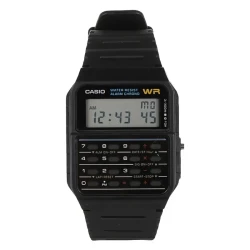
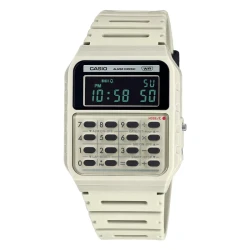
It's by far the most sought-after Casio of all. The CA-53W was released in 1984, two years after the CA-50, and it does exactly what its name promises: eight digits, ten buttons below the dial, and the four basic arithmetic operations. It was the watch worn by Marty McFly in *Back to the Future*, which gave it a second life that Casio hadn't anticipated.
What's surprising is that it was never just a gimmick. The case is 34 millimeters, the battery lasts seven years, and it actually does the math. At 49.90 euros, it's the least expensive watch in this guide that actually has something to offer.
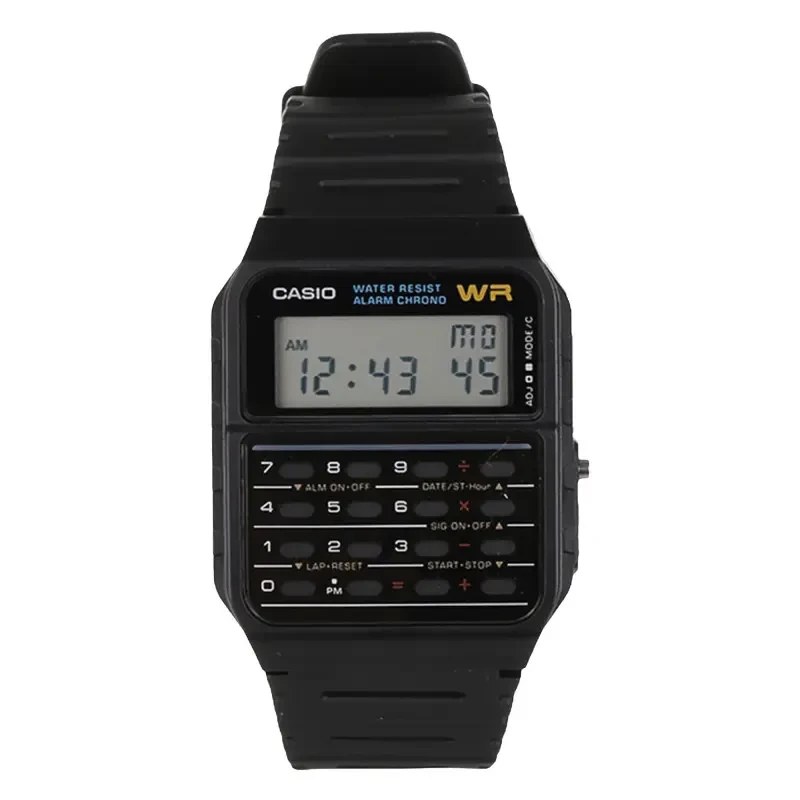
49,90 €
The 1984 calculator, reissued exactly as it was. Ten keys, a battery that lasts seven years.
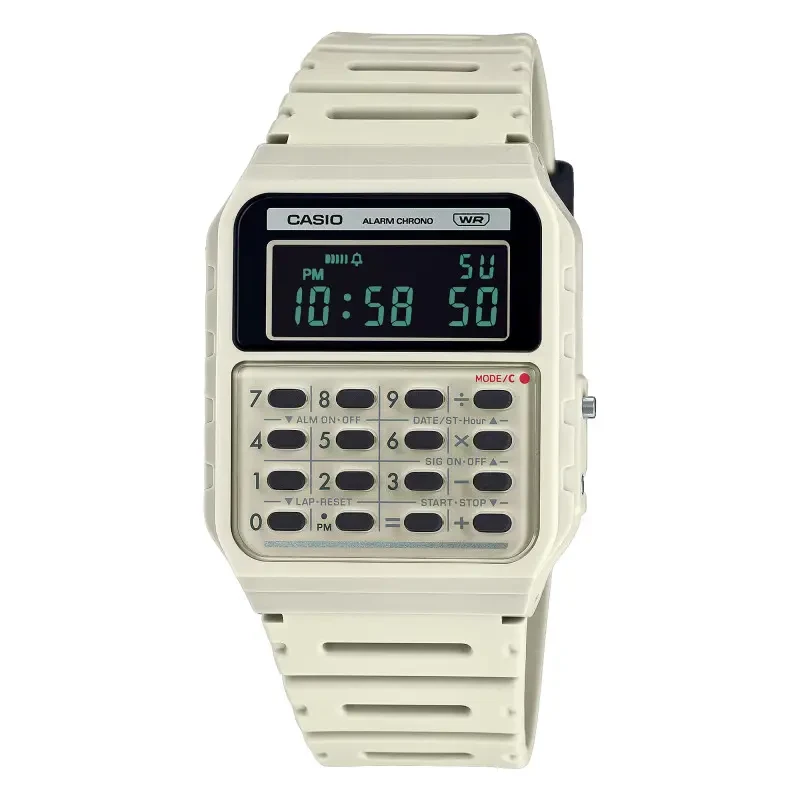
59,90 €
The same model, in a tinted case. This is the version you see on the wrists of creative types.
Just to be honest: the CA-53W sells out quickly, and it takes us ten to fifteen days to restock it. The product listing reflects the current availability. If you're buying for a specific date, the Heritage Colors version is in stock now.
Vintage Digital Watches: F-91W, A158, A168
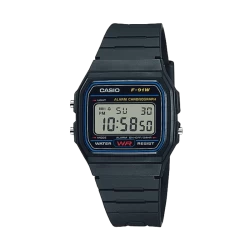
If any watch deserves to be called “universal,” it’s the F-91W. Released in 1989 and sold for around twenty euros, it’s still being manufactured today at an estimated rate of several million units per year. It features a 38-millimeter resin case, weighs 21 grams, and has a battery life of seven years. It has never changed because there was nothing to change.
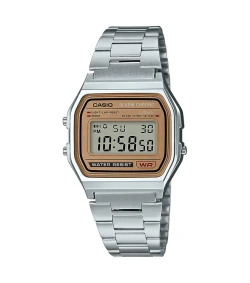
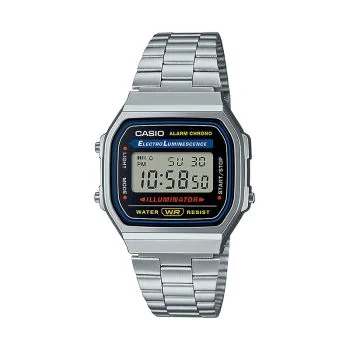
Alongside them, the A158 and A168 offer something different: the same digital display, but in a steel case and bracelet. The A158 is the smallest, at 33 millimeters, and is worn by both women and men. The A168 is slightly wider and features side lighting. Both models date back to the late 1970s and have never been discontinued.
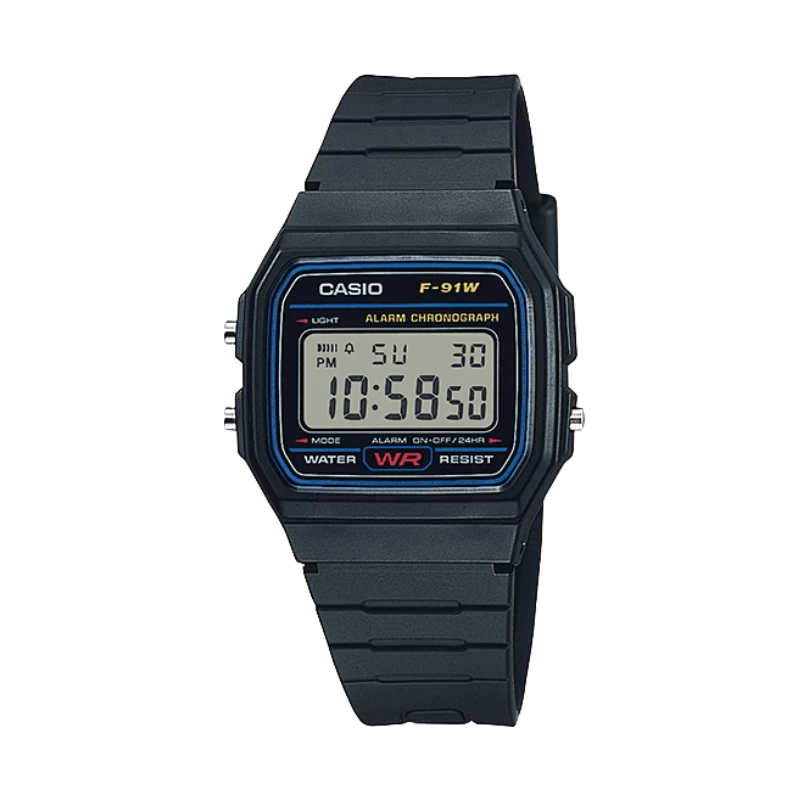
Casio Timeless Collection Resin
19,90 €
Less than twenty euros and seven years of battery life. The perfect entry-level model from the brand.
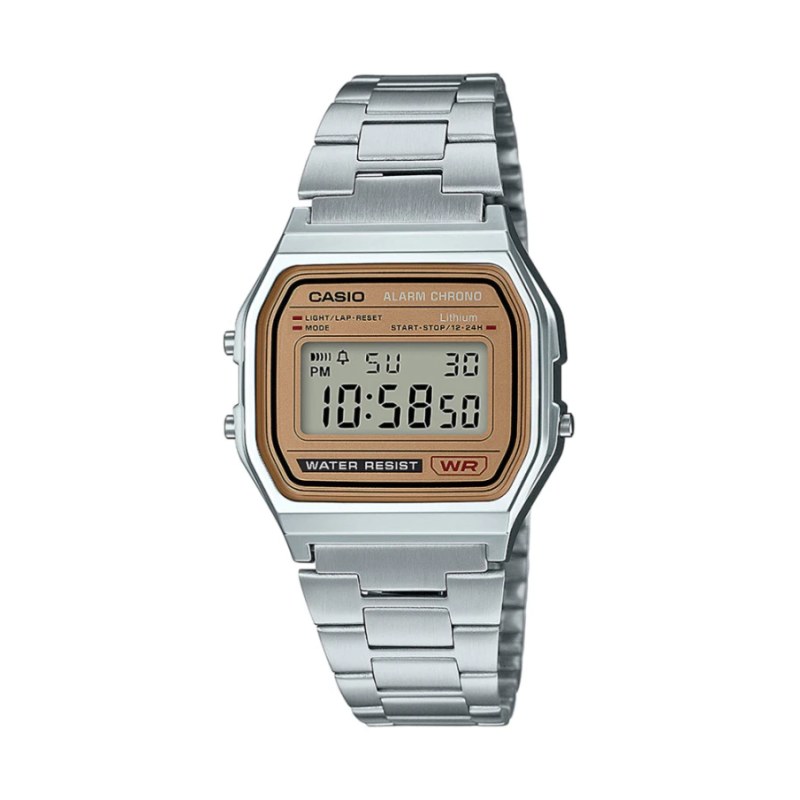
39,90 €
The 1978 Gold Steel, 33 mm. The most copied digital watch in history.
39,90 €
The A158's sister model, featuring side lighting and a slightly wider housing.
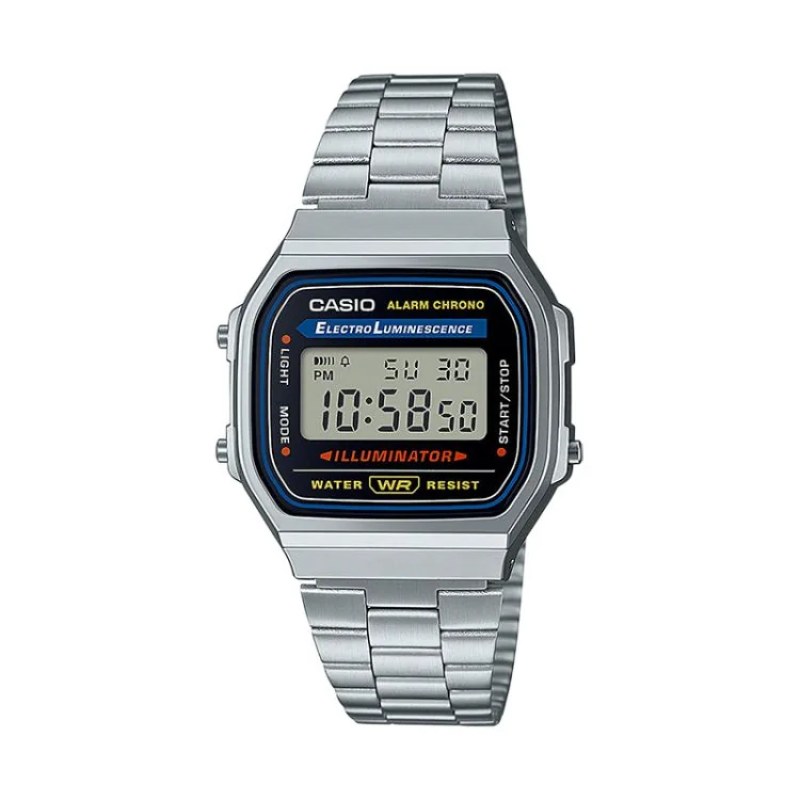
Casio Vintage Iconic Stainless Steel
38 €
Brushed steel, black dial. The understated style of 1980s digital watches.
We've dedicated an entire guide to this family, highlighting the differences between each model: the Vintage Casio Guide. The complete selection is on the Casio watches page.
Gold, Steel, and Why They Work So Well

In just a few years, gold-tone jewelry has become the most popular fashion accessory. The reason is simple: it’s the only item that costs forty euros and doesn’t try to look like it costs four hundred. It embraces what it is, and that’s exactly what makes it wearable with anything.
In the range above, the vintage collection features solid steel and a sunburst dial. It moves away from a purely digital display to include hands, a date window, and a polished finish. The price doubles, but it’s still under one hundred euros.
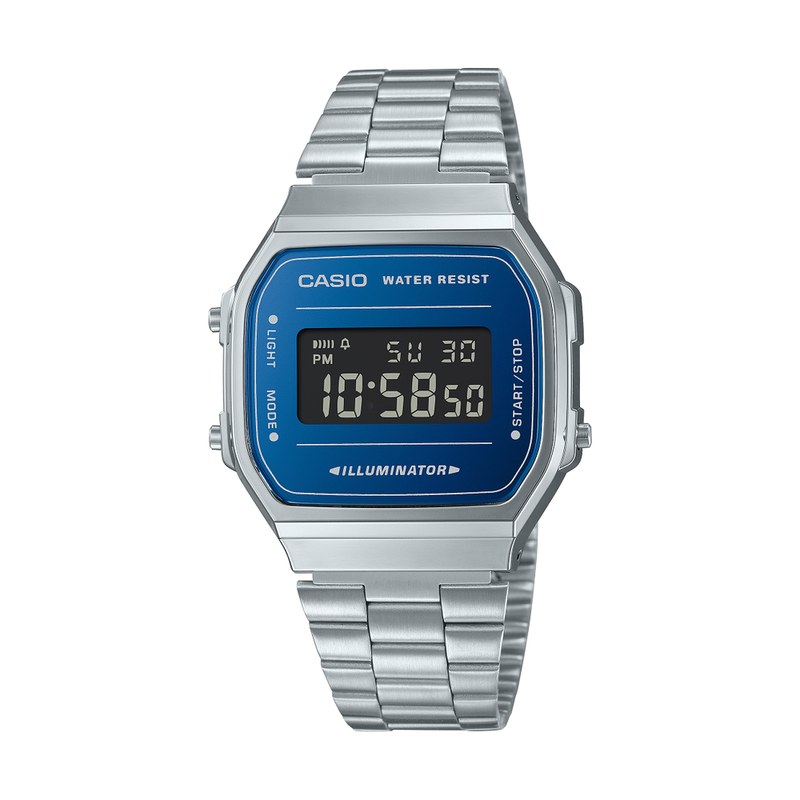
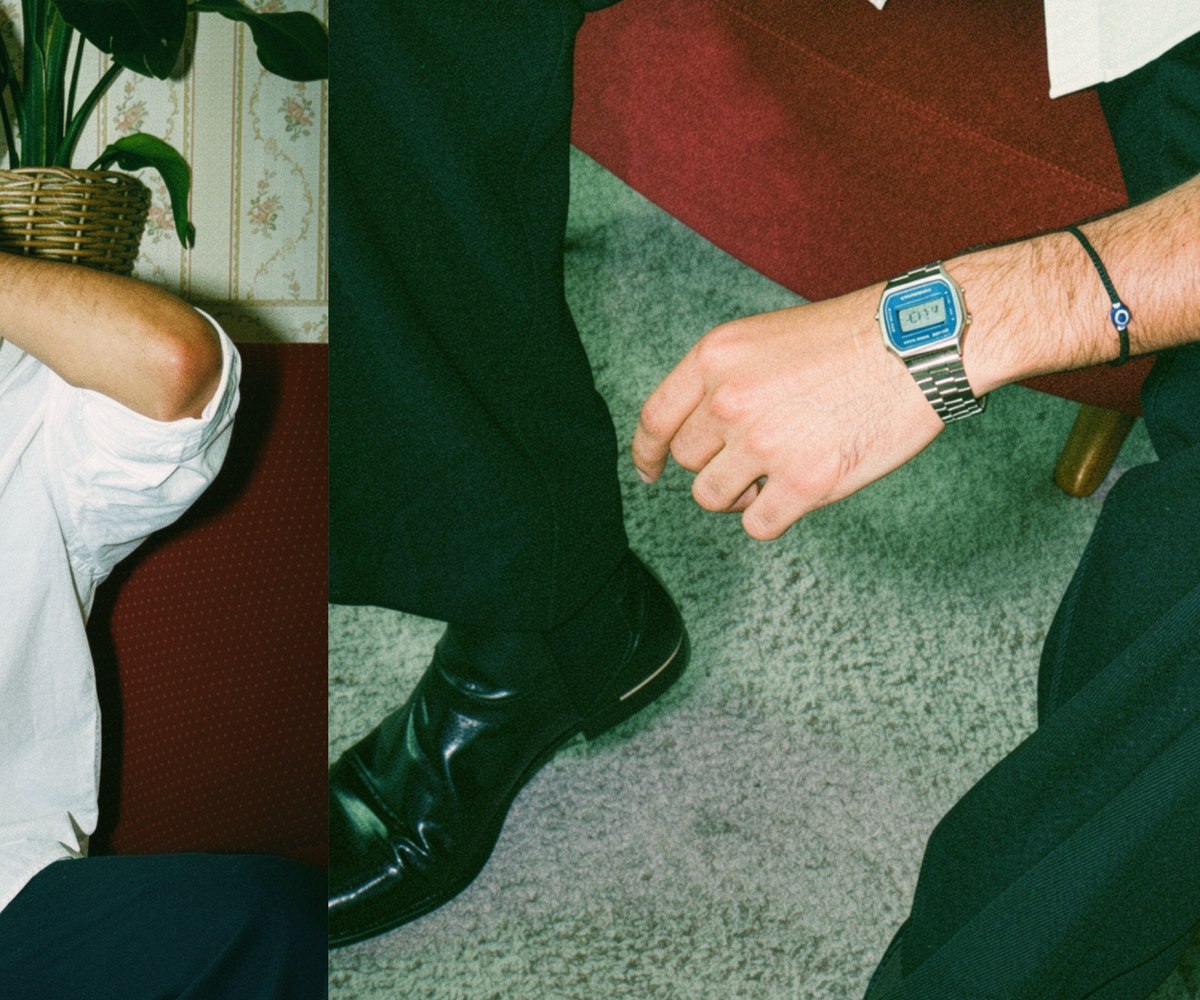
49,90 €
The metallic blue finish on the A168. A digital design that’s sure to turn heads.
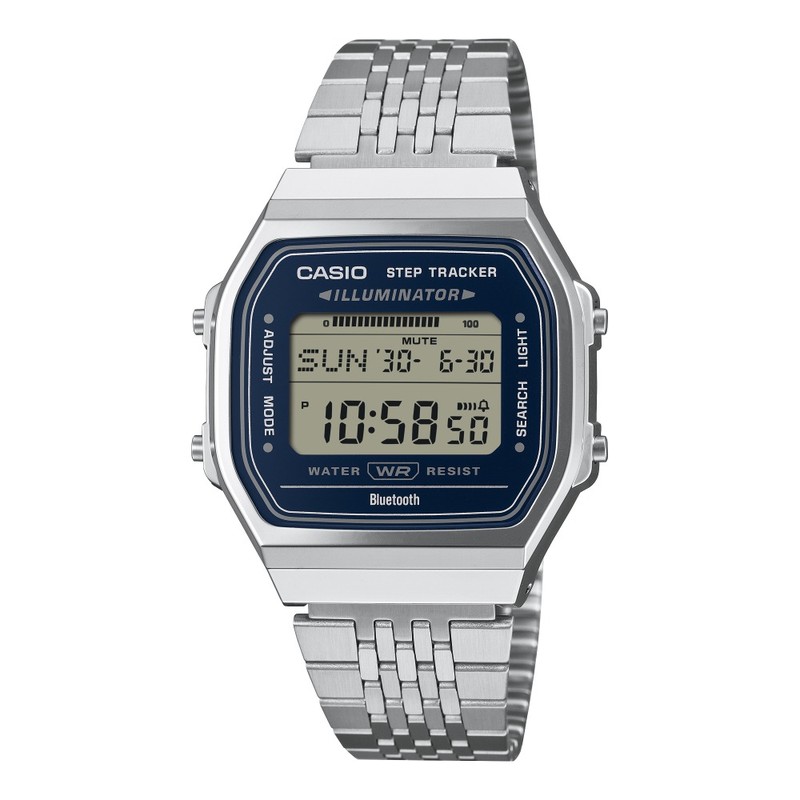
Casio Vintage, stainless steel, blue dial
79,90 €
Steel case, blue sunburst dial, hands, and date window.
G-Shock: The Watch Born from a Fall
In 1981, a Casio engineer named Kikuo Ibe dropped the watch his father had given him. It broke. He set himself a goal that his colleagues deemed absurd: a watch that could survive a ten-meter drop, run on a single battery for ten years, and withstand ten bars of water pressure. This was the “rule of three tens.” It took him two years and, according to the company’s account, more than two hundred prototypes. The DW-5000C was released in 1983.
The solution wasn't to reinforce the case but to suspend the module inside it; the idea came to him while watching a ball bounce in a park. Forty years later, all G-Shock watches still operate on this principle.
Today, two designs stand out. The square DW-5600, a direct descendant of the 1983 model. And the octagonal GA-2100, released in 2019 and nicknamed “CasiOak” for its resemblance to a much more expensive luxury watch: water-resistant to 200 meters and weighing 51 grams.
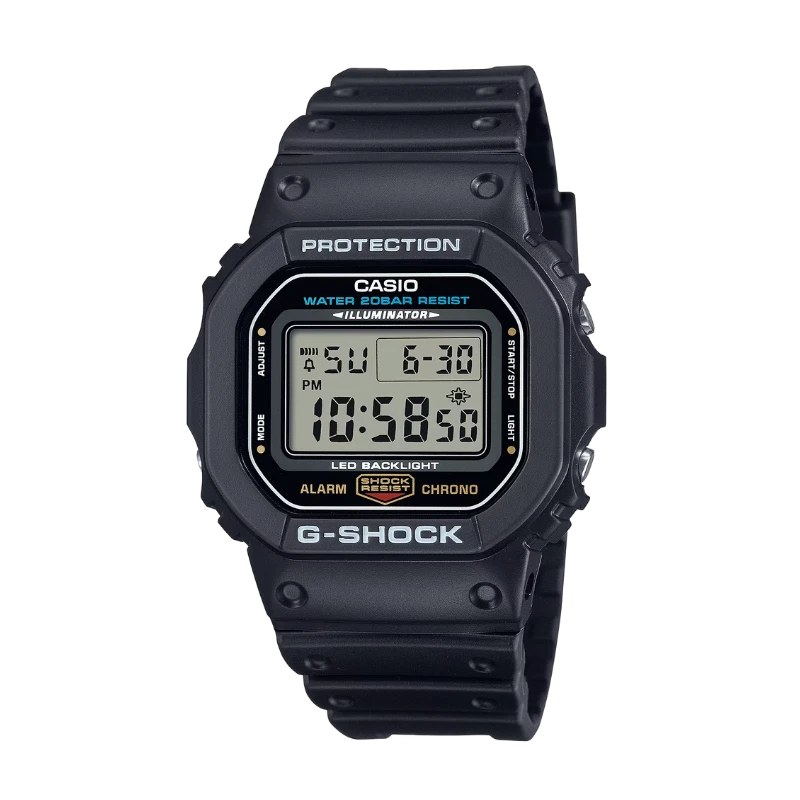
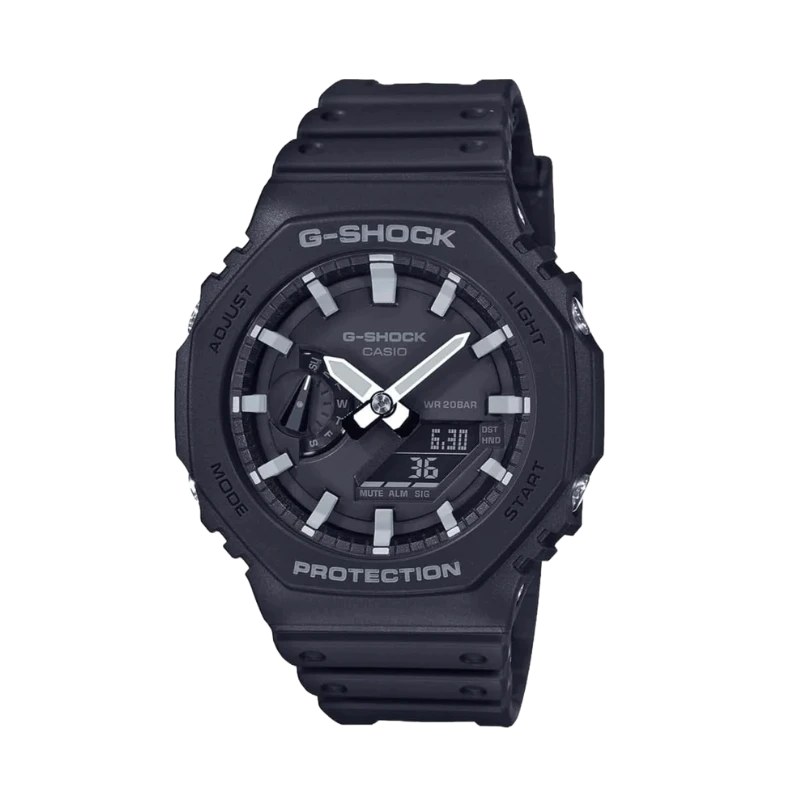
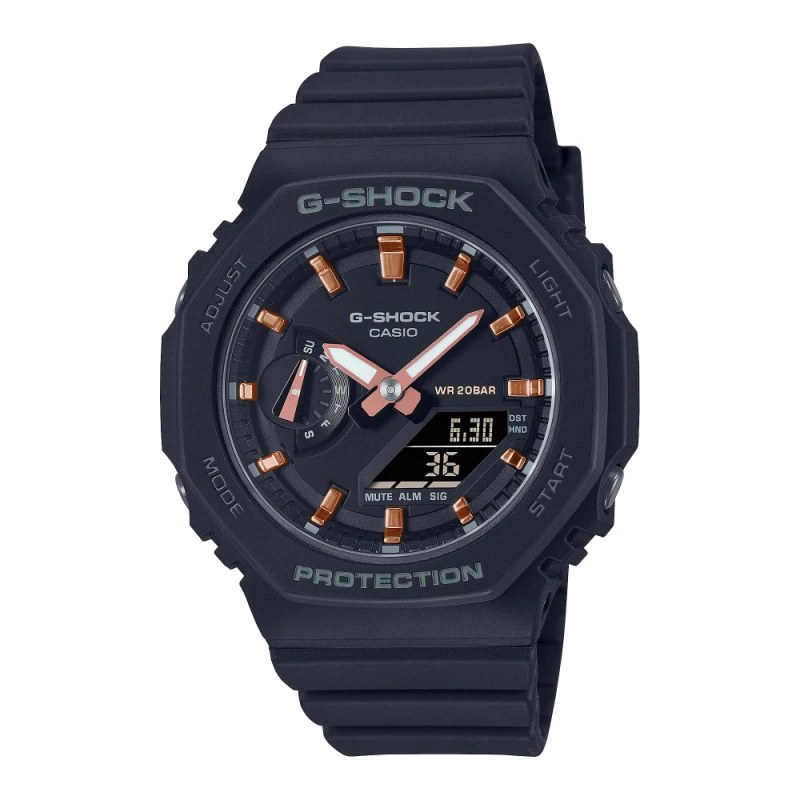
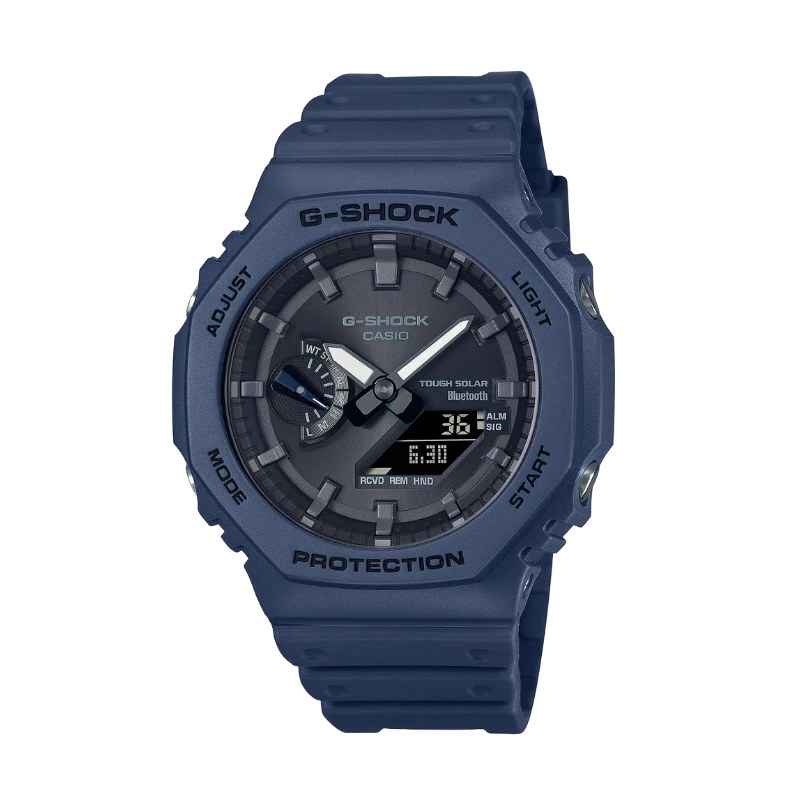
We have 126 G-Shock watches in stock. Details on the series, sizes, and features can be found in our G-Shock guide.
Choosing a Casio by Color

It’s a search method that no one ever takes seriously, yet it’s the second most common after searching by model number. People don’t type in a model number; they type “blue Casio ” or “green Casio.” And they’re right: on a watch that costs less than 100 euros, the dial color is the only real aesthetic choice.
Blue is the most popular color, and it’s also the one found in the most collections: digital marine, sunburst dial on a steel case, classic G-Shock. Green comes in second; it’s a more recent addition, often in pine or khaki shades, and it has the advantage of not looking dated nearly as quickly as one might think.
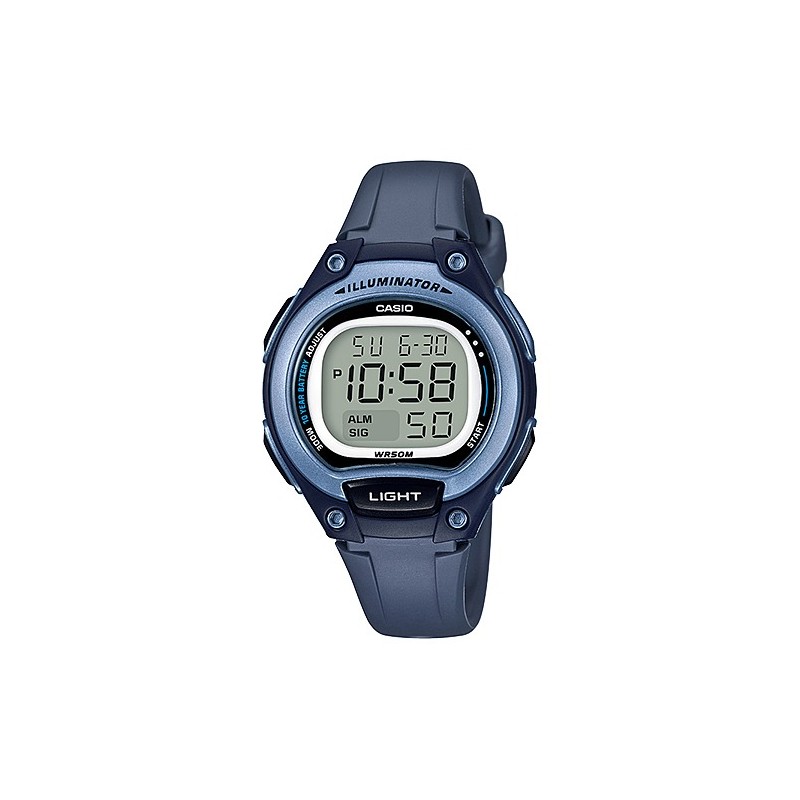
Casio Digital Collection in Navy Blue
39,90 €
The "Digital in Midnight Blue," made of flexible resin, for less than forty euros.
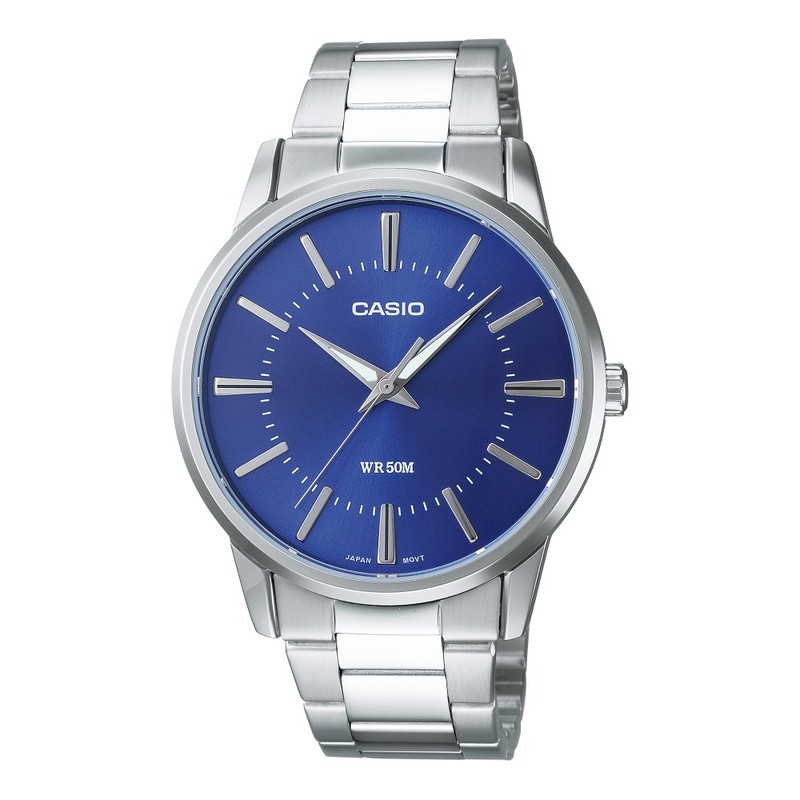
Casio MTP Collection with Blue Dial
49,90 €
Three hands, steel bracelet, blue dial. The perfect everyday watch.
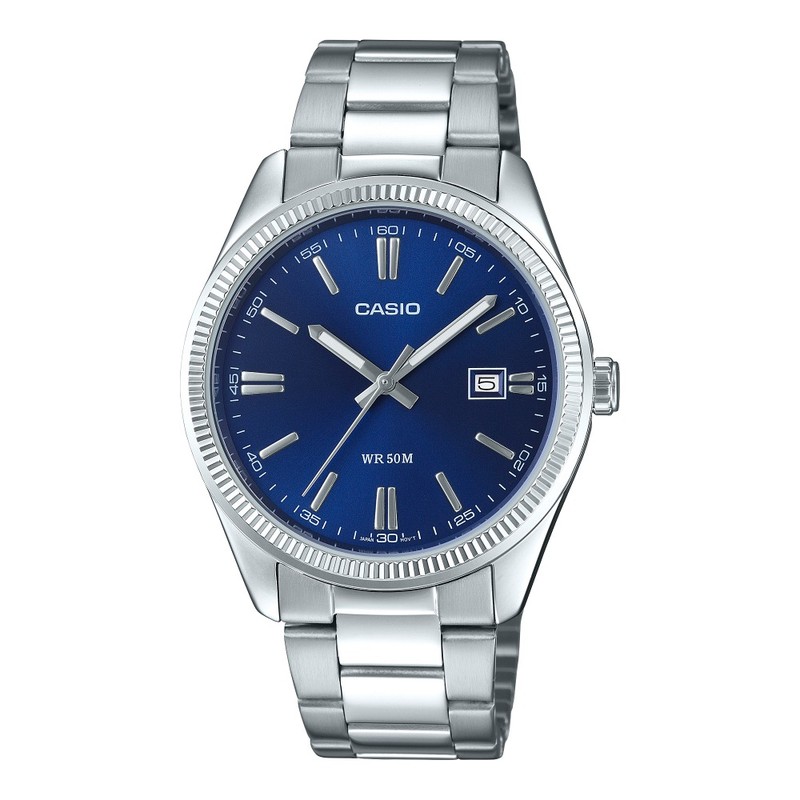
59,90 €
Same design, wider case, and a date window at the 3 o'clock position.
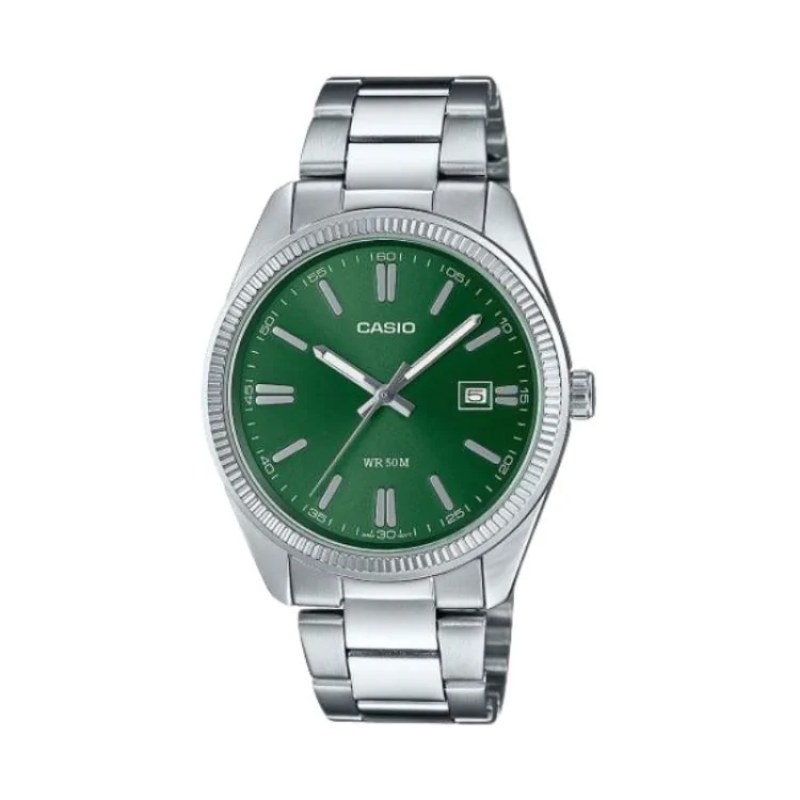
Casio Collection with a green dial
59,90 €
Pine green on a brass dial, with a mesh steel band. Subtle and just the right vintage look.
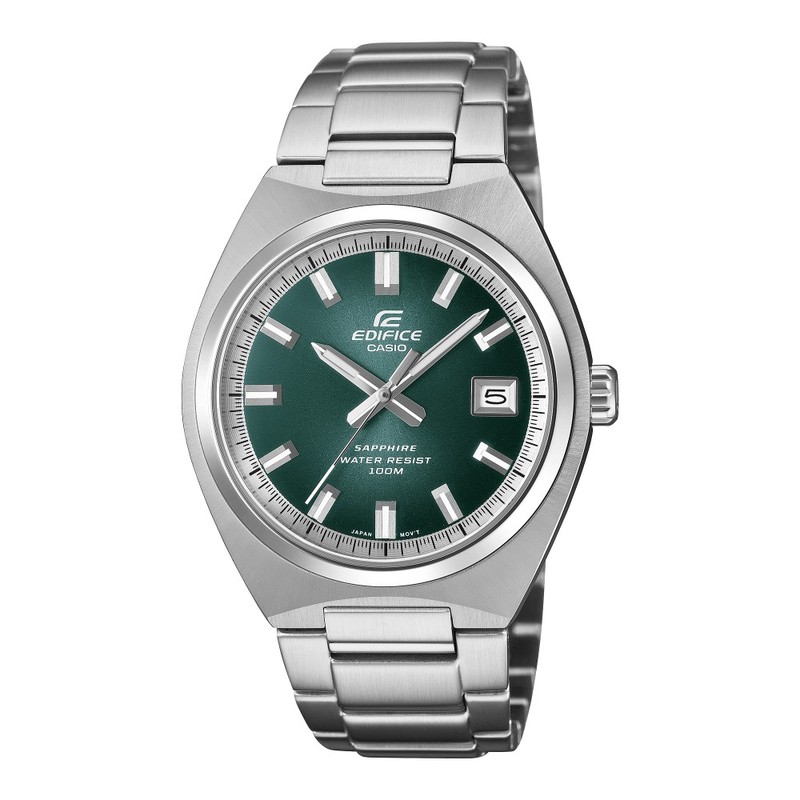
Casio Edifice with a green dial
139 €
The Edifice in green, sapphire, and solid steel. A cut above the rest.
MTP and Edifice: The Casio You Wear to the Office

This is the side of Casio that nobody knows about. MTP stands for Metal Timepiece: three hands, a steel case, and no visible electronics. These are fifty-euro watches that look like two-hundred-euro watches. We have fifteen in stock.
At the top of the line, Edifice is the brand’s premium line: stainless steel chronographs, sometimes with sapphire crystal, solid cases, and—in recent years—Bluetooth connectivity that automatically sets the time. The line is identified by its prefixes: EFR, EFV, EFB, and ECB. This is where you’ll find our Casio watches priced at over two hundred euros.
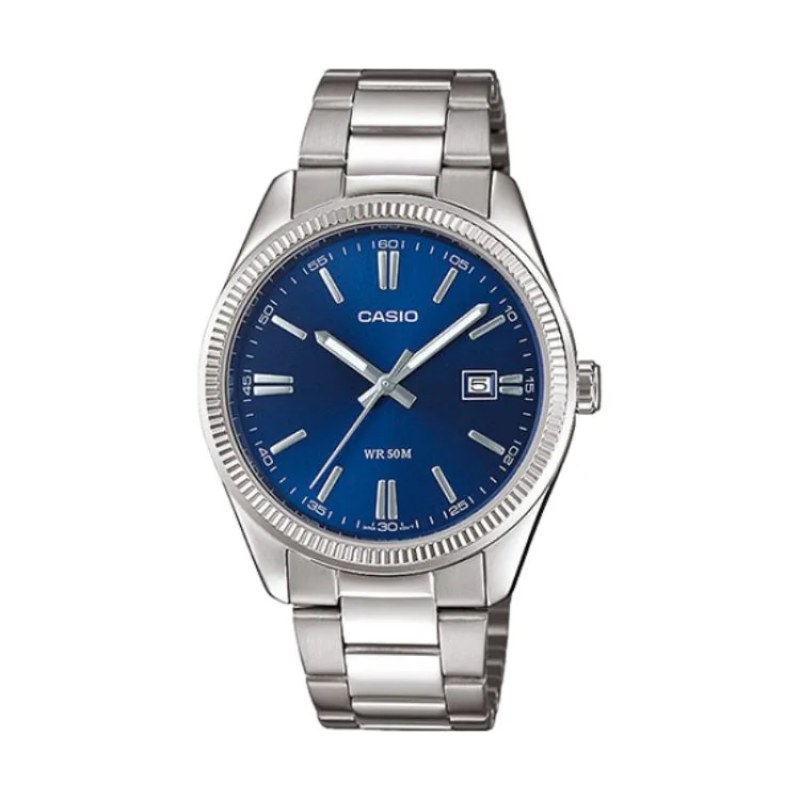
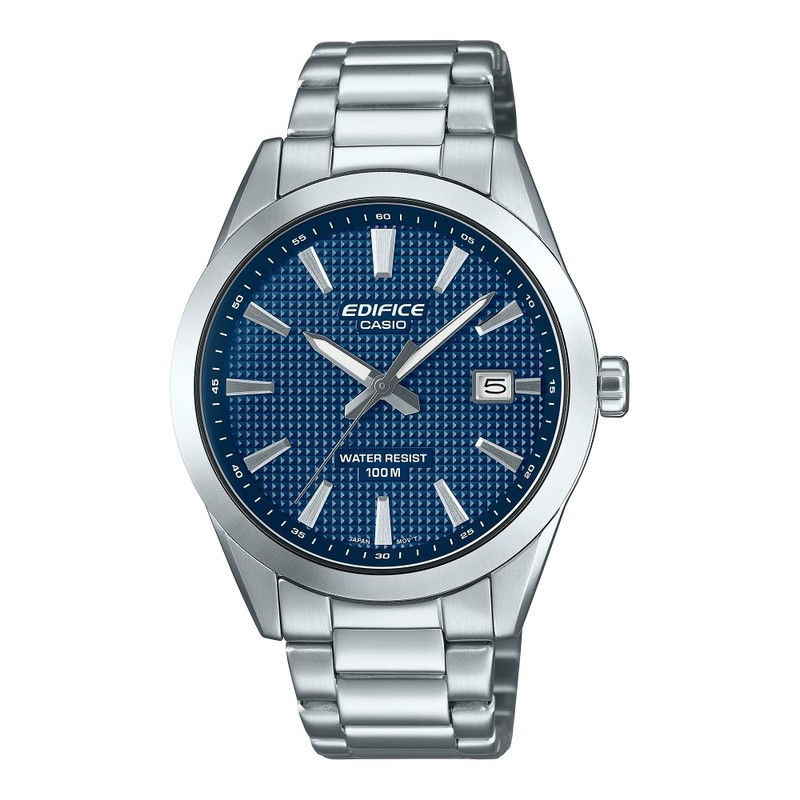
99,90 €
Stainless steel chronograph with a blue dial. The entry-level model in the dress watch collection.
Casio Edifice with a green dial
139 €
The Edifice in green, sapphire, and solid steel. A cut above the rest.
The MDV, the 90-euro diver
The MDV-106, nicknamed “Duro” by collectors, is probably the best deal in contemporary watchmaking. It offers 200 meters of water resistance, a unidirectional rotating bezel, and luminescent hands for less than 100 euros. The same features on a Swiss watch cost ten times as much.
The current version, the MDV-107, retains the original design while updating it slightly. The “D” in the model number indicates a steel band; its absence indicates a resin band. Be careful not to confuse the 200-meter water resistance of an MDV with the 50-meter water resistance of a standard Casio Collection watch: the former is dive-rated, while the latter is not.
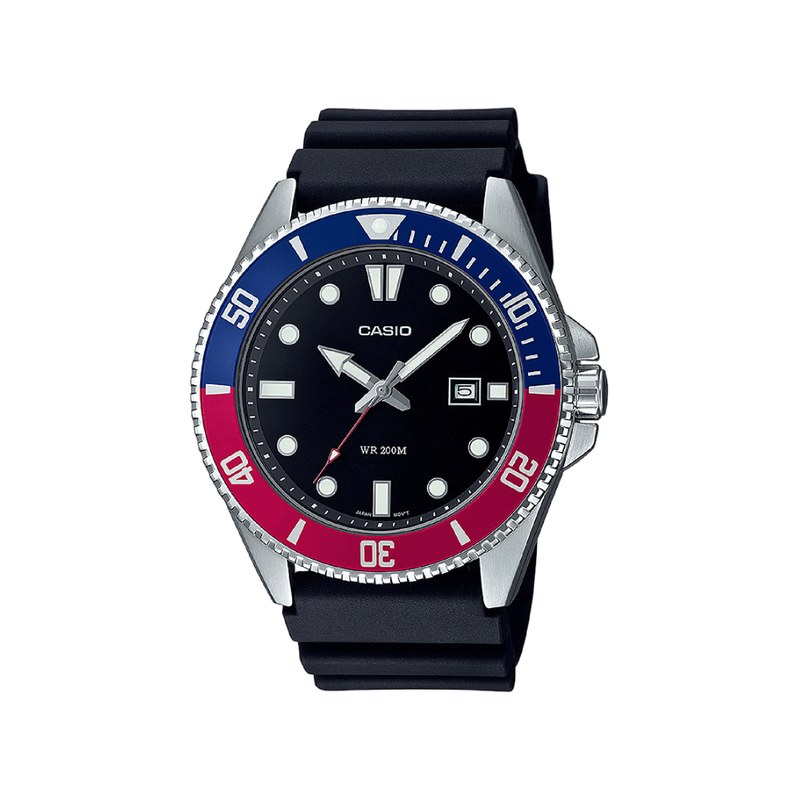
89,90 €
200 meters, unidirectional rotating bezel. The bargain-priced diver's watch.
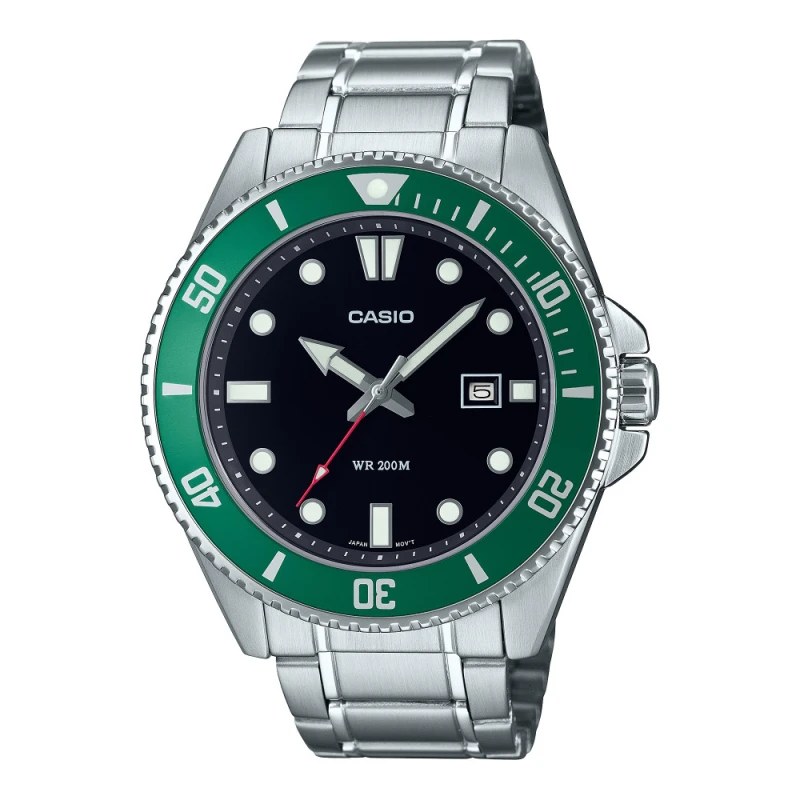
Casio MDV-107D with a steel bracelet
99,90 €
The same Duro on a steel band, with a green dial. It goes with everything.
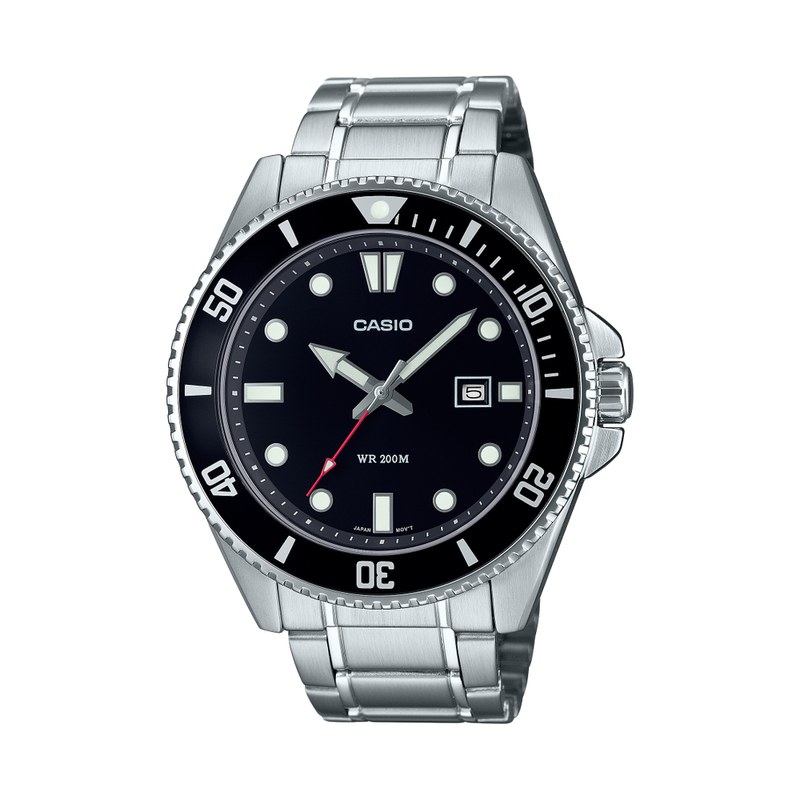
99,90 €
Black dial, stainless steel, 200 meters. The most understated diver's watch in the collection.
The rest of our waterproof collection can be found in the diving watches section.
For her, for a child: small sizes

Casio doesn't make "women's" watches; it makes smaller models, and that's a difference that matters. The LA-20WH measures 26 millimeters, while the LA670 measures 33. These are the same watches as the men's models, just smaller, without the obligatory pink or rhinestones.
For a child, this is probably the best possible choice: thirty euros, a battery that lasts for years, a resin that can withstand the rigors of the playground, and no big deal if it gets lost. If you're unsure about the size, our guide to diameter based on wrist circumference explains how to choose.
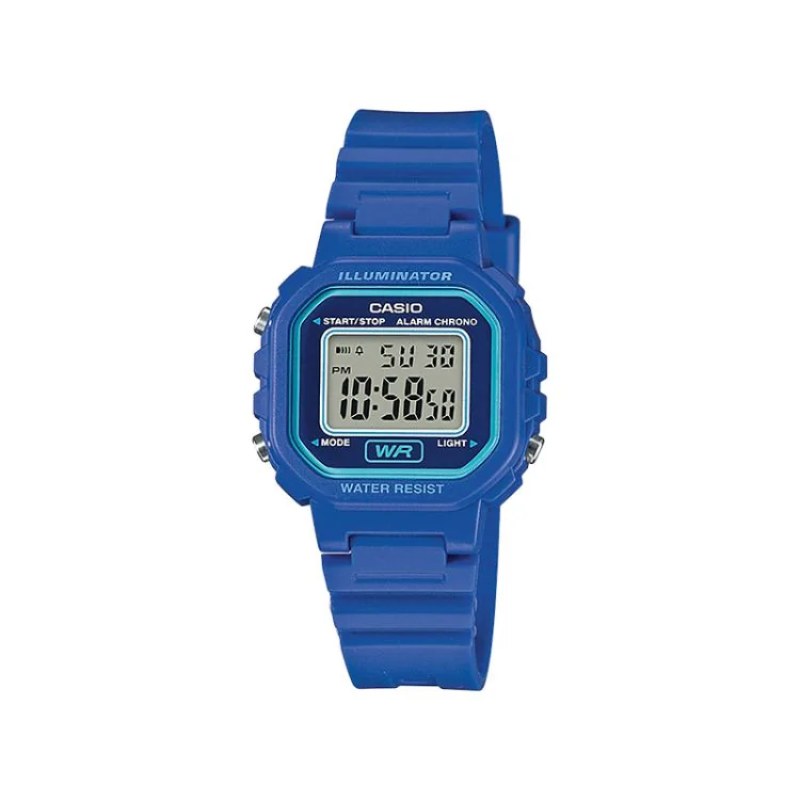
29,90 €
The 26-mm digital mini watch, made of blue resin. My first successful watch.
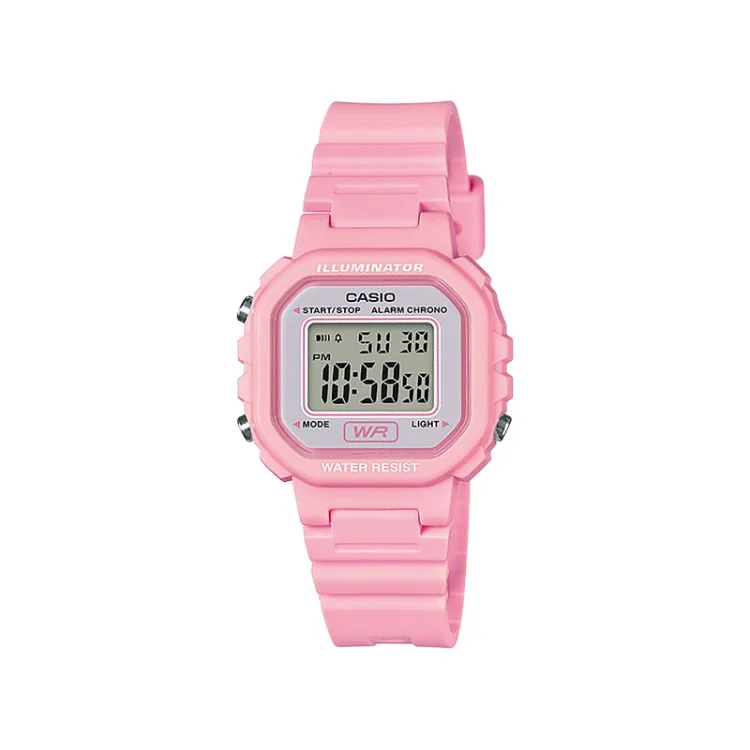
The full collections are here: women's watches, children's watches, and men's watches.
How to Choose a Casio Watch in Four Questions

- Digital or analog? That’s the first decision, and it’s a crucial one. Digital watches last seven to ten years on a single battery and are easy to read at a glance. Analog watches look better with formal attire. The hybrid model, with the prefixes GA and AQ, does both but doesn’t excel at either.
- Are you going to get it wet? A Casio Collection watch rated to 50 meters can handle rain and hand washing, but not the pool. For swimming, you need a 100-meter rating. For diving, an MDV rated to 200 meters. That’s the one feature you can’t change after you buy it.
- What's your wrist size? If it's under 15 centimeters, go for the smaller models, like the LA-20WH or A158. Between 15 and 17, almost anything will fit. Anything larger than that, the G-Shock and Edifice models are the right choice for you.
- Resin or steel? Resin is lightweight, puncture-resistant, and doesn't show scratches. Steel looks more sophisticated, is heavier, and shows scratches. The price reflects this: expect to pay 20 to 40 euros more for the steel version of the same model.
What You Need to Know Before Buying
Four points you don't often read about.
Mineral glass is used on nearly the entire lineup. Sapphire crystal is found only on the top-of-the-line Edifice models and a few Pro Trek models. Mineral glass scratches, and on a watch worn every day, those scratches eventually become noticeable. This is a deliberate trade-off that keeps the price down.
The resin strap ages over time. It takes five to eight years for it to harden, though this process can be faster if it’s exposed to a lot of sunlight. It can be replaced for about fifteen euros, which makes the watch practically everlasting—but it’s important to be aware of this.
Replacing the battery is no small matter for water-resistant models. A G-Shock or an MDV requires a new gasket and a water-resistance test after being opened. Our workshop does this, but a shopping mall kiosk rarely does.
The model numbers are so similar that they can be misleading. An A158WA and an A158WEA are not the same watch. A single digit or letter can change the color—and sometimes the strap. When comparing two prices online, be sure to compare the full model numbers first.
Frequently Asked Questions About Casio Watches
What does a Casio watch model number mean?
It is read in three parts. The initial letters indicate the family and type of watch: GA and GM for G-Shock, MTP for classic three-hand models, MDV for diver’s watches, EFR and EFV for Edifice, and CA for the calculator watch. The number that follows identifies the model. What comes after the dash indicates the color of the dial and band, followed by the target market. Among our 426 Casio watches in stock, we have 45 different prefixes.
Which Casio watch has a calculator, and is it still available?
It's the CA-53W, released in 1984 and still in production today, priced at 49.90 euros. It features an eight-digit display, ten buttons below the dial, a 34-millimeter case, and a battery that lasts seven years. There's also a Heritage Colors version with a tinted case, priced at 59.90 euros.
Which blue Casio watch should you choose?
It depends on the style you're looking for. For a digital watch, the navy blue Casio Collection for 39.90 euros. For a steel watch with hands, the MTP with a blue sunburst dial for 49.90 euros. For a G-Shock, the blue GA-2100 for 149 euros. Blue is the most popular color in the Casio lineup and the one available in the most collections.
How long does the battery in a Casio watch last?
Seven to ten years for simple digital models like the F-91W or the A158. Two to three years for analog models and multi-function G-Shock watches. The solar-powered versions, with the prefixes GW and PRW, don't require any battery changes at all.
Can you swim with a Casio watch?
Only models with a water resistance rating of 100 meters or higher. A standard Casio Collection watch is rated for 50 meters, which is sufficient for rain, showers, and washing your hands, but not for swimming. G-Shock and MDV models are rated for 200 meters and can be submerged without any problems.
What is the difference between a Casio A158 and an A168?
The case. The A158 is 33 millimeters wide; the A168 is slightly wider and features side lighting on the screen. Both models share the same digital display, the same steel band, and the same price—around 40 euros. The A158 is better suited for slender wrists.
Which Casio watch should you choose for a child?
The LA-20WH, 26 millimeters, made of resin, for 29.90 euros. It’s lightweight, easy to read, the battery lasts for years, and the resin can withstand the rigors of the playground. It’s the perfect first watch, and its price means that losing it isn’t a big deal.
Is the Casio F-91W still in production?
Yes, it has been in continuous production since 1989 with no significant changes. It features a 38-millimeter resin case, weighs 21 grams, and includes a chronograph, alarm, backlight, and a battery rated to last seven years. It is one of the most widely produced watches in history, priced at around twenty euros.
Which Casio watch should you wear to the office?
An MTP or an Edifice. MTPs are three-hand steel watches with no visible electronics, priced between 50 and 90 euros. Edifice models are a step up, featuring chronographs, sapphire crystal in the top-of-the-line models, and substantial cases, priced from 100 to 400 euros.
Why do two identical Casio watches have different model numbers?
Because the last part of the model number refers to the distribution market, not the product. On our product pages, the most common suffixes are AER, AEF, AVEF, and ER—all of which are European. The same watch sold in Japan will have the suffix JF, while in the United States it will have a different suffix. It’s the same watch, with the same warranty here.
Our final tip

If you've never owned a Casio, go for the GA-2100 at 99.90 euros. It's slim for a G-Shock, works just as well with work clothes as it does on the weekend, is water-resistant to 200 meters, and will never go out of style—because it's already become a classic.
If you're looking for something with a story behind it, go for the CA-53W calculator for 49.90 euros. It dates back to 1984, it still works exactly the same way, and no one else around you will have one.
And if your budget is twenty euros, the Timeless Collection isn't just a consolation prize: it offers the same reliability, just without the stainless steel.
The entire collection is featured on the Casio watches page. For more information, check out our G-Shock guide, our guide to vintage Casio watches, and our article on case shapes, which explains why the GA-2100 has an octagonal case.