
In summary: Club de la Montre is a French watch retailer that has sold more than 3,000 watches since 1968. A common misconception we’ve seen in our inventory: when it comes to sports, an expensive watch is often the worst choice. Of the 362 watches water-resistant to 100 meters or more currently available, 83 cost less than 100 euros, and they’re the ones that get the job done. Our top pick to start with: the Sector Ex-32 at 32 euros, 100 meters water-resistant, with a stopwatch accurate to the hundredth of a second, and a 40-mm case.
There are two ways to choose a sports watch. The first is to look at the price, assuming that the more expensive it is, the more durable it is. The second is to consider what you’ll be putting it through. These two approaches lead you to completely different sections of the store.
A sports watch must do four things: be water-resistant, withstand shocks, be easy to read at a glance, and be comfortable enough to forget you’re wearing it. None of these four features is expensive. What’s expensive in watchmaking is precisely what serves no purpose when you’re sweating. Here’s how to choose, along with nine tested models available for order in September 2026, ranging from 32 to 119 euros.
Why an Expensive Watch Is the Wrong Choice
High-end watchmaking hinges on three things: an automatic movement, a stainless steel case, and a sapphire crystal. Taken one by one, they’re all obstacles to sports.
Automatic watches don't like shocks. A mechanical movement is an assembly of tiny parts mounted on pivots. The repeated vibrations from running or playing tennis throw it off, and the automatic winding mechanism goes haywire. Quartz watches, on the other hand, aren't affected at all.
Steel weighs three times as much as resin. A 44-mm steel case weighs nearly 150 grams, including the strap, compared to 50 to 60 grams for an equivalent resin model. During an hour-long run, you can feel the difference with every stride.
Sapphire is less prone to scratching but more prone to breaking. Sapphire glass is remarkably resistant to scratches but much less resistant to direct impacts. Mineral or acrylic glass gets scratched, and that's it—it doesn't shatter when dropped onto a hard floor.
This is evident in our inventory. Of the 362 watches that are water-resistant to 100 meters or more, 83 cost less than 100 euros and 196 cost more than 200 euros. The former are designed for sports, while the latter are designed to look like they’re meant for sports.
Resin, silicone strap, large numerals: the specs fit on three lines, and it costs less than 60 euros.
For running: lightness above all else
When it comes to running, the only factor that really matters is weight. A watch that reminds you of its presence with every stride ends up in a drawer. The second factor is the stopwatch, which a digital display makes easy to read.
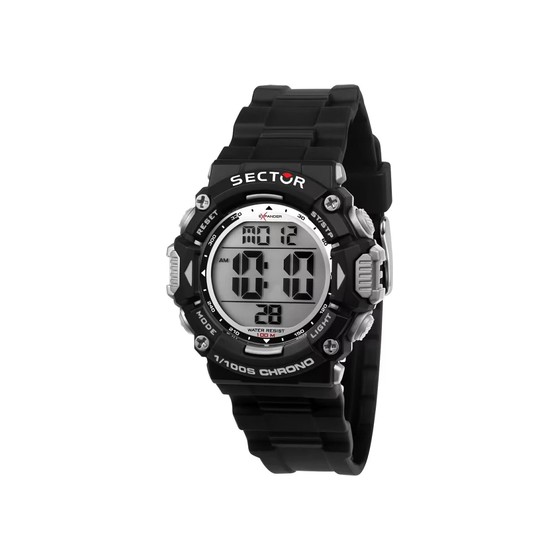
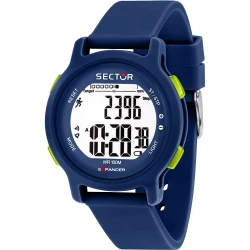
Sector
Ex-32 Digital Silver and Black
Resin, 100 m, 40 mm
Stopwatch accurate to the hundredth of a second, backlight, and only 14.5 mm thick.
32,00 €
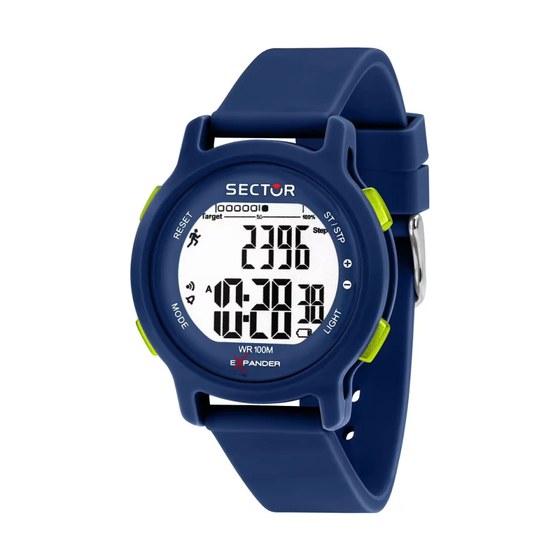
Sector
Ex-27 - Foxglove - Blue - R3251191002
Polyurethane, 100 m, 43 mm
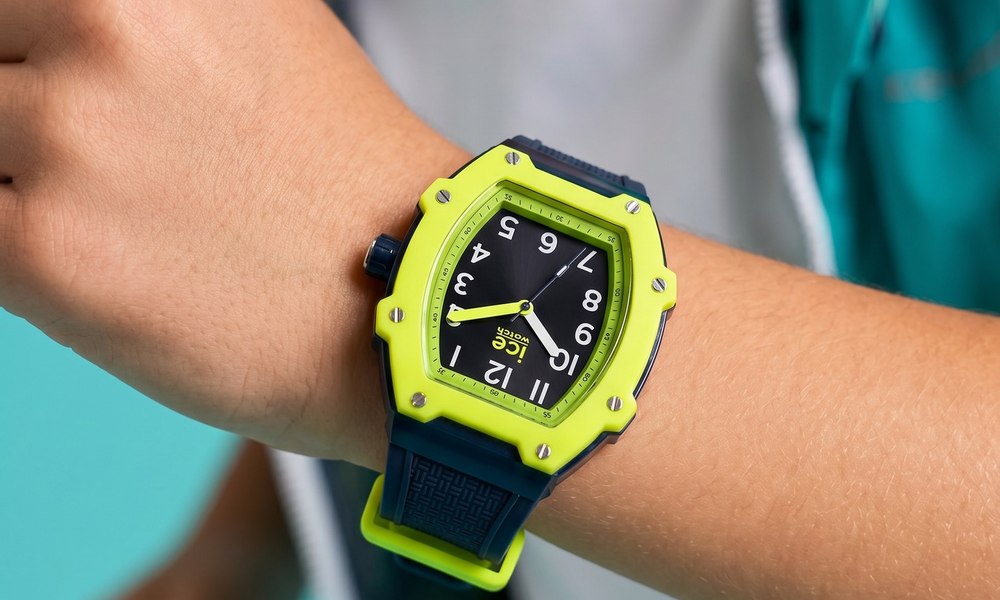
Polyurethane case and negative dial: the time remains easy to read even in direct sunlight.
59 €
For swimming: 100 meters, no less
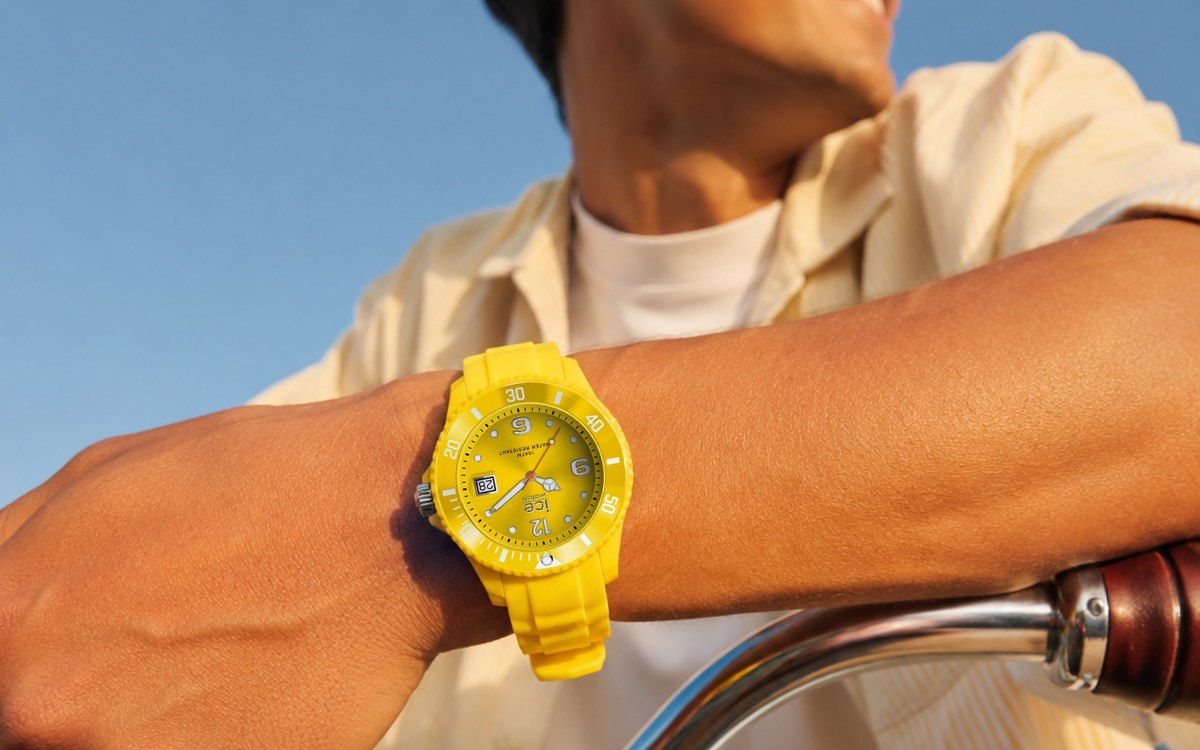
This is where most buyers go wrong. A watch rated at 30 meters is not suitable for swimming: that number refers to laboratory pressure, not depth. You need a watch rated at 100 meters for the pool, and the strap must be made of silicone or resin—never leather.
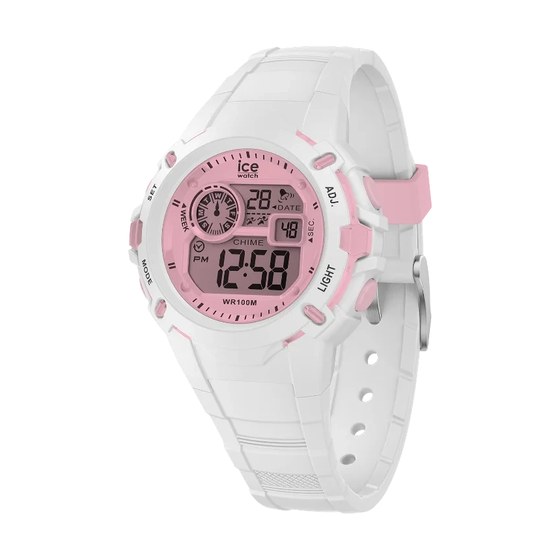
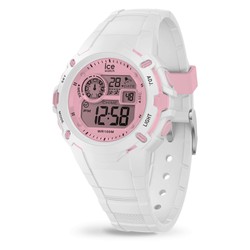
Ice-Watch
ICE Digit Explorer - White Pink
Silicone, 100 m, 41 mm
Brightly colored, it dries as soon as it comes out of the water without retaining any odor.
49 €
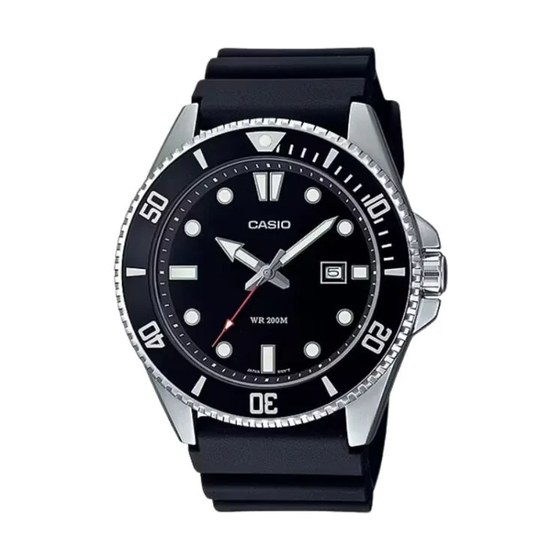
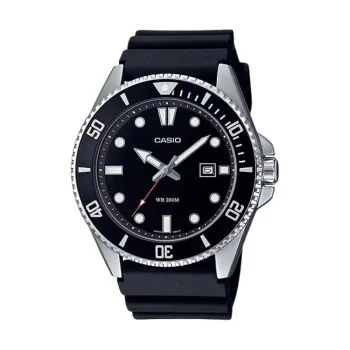
Casio
Collection - Water-Resistant to 20 ATM - Black Resin - MDV-107-1A1VEF
Resin, 200 m, 44 mm
Two hundred meters for less than 90 euros: the best value in the catalog.
89,90 €
Details on what each certification indicates can be found in our water resistance guide, and the full selection is available in the water-resistant watches section.
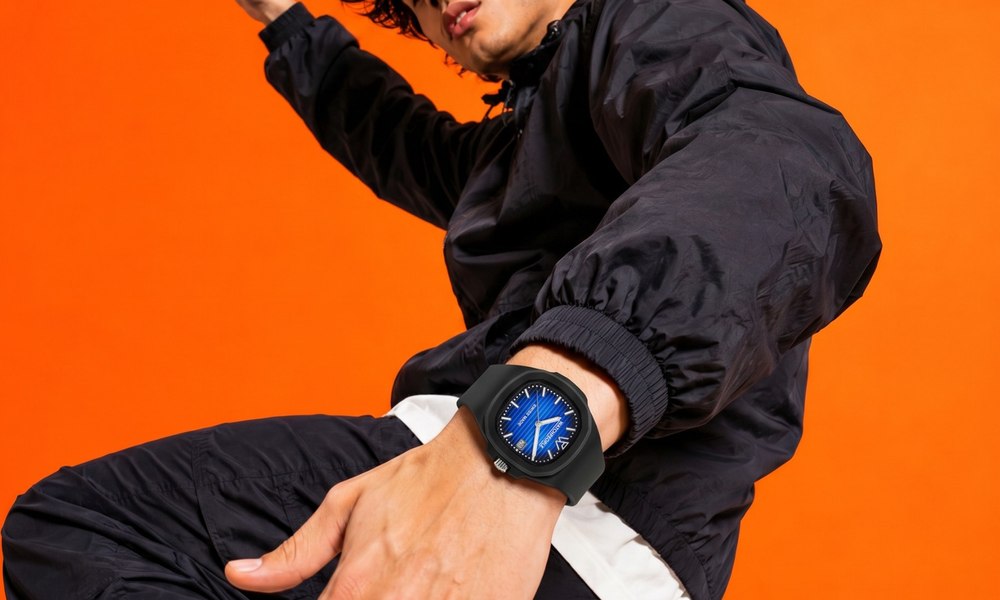
Indoors, it's not water that threatens the watch—it's impacts against the cast iron and the floor.
For the gym and cross-training: absorbing impacts
A bar you set down, a cast-iron wall, a concrete floor: the gym is the harshest environment for a watch. It’s the G-Shock’s natural habitat—designed in 1983 to survive a ten-meter fall, with a module suspended inside the case rather than fixed in place.
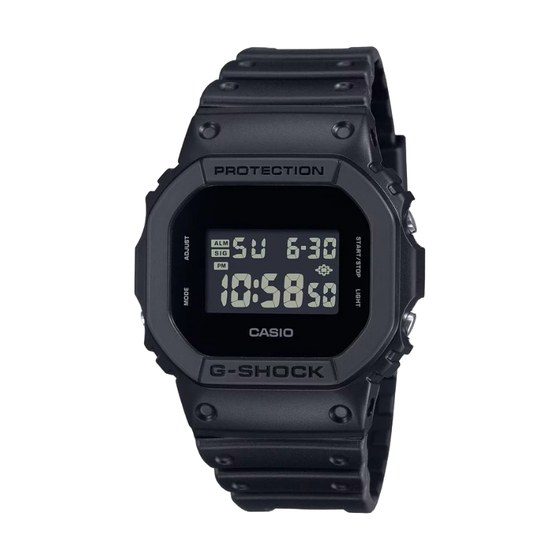
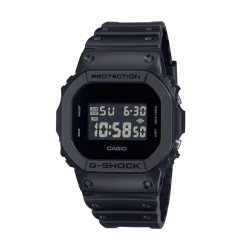
Casio
G-Shock - 5600 Series - Black Digital - DW-5600UBB-1ER
Resin, 200 m, 42 mm
The "Carree des Origines": a hanging module made of solid resin—nothing to break.
99,90 €
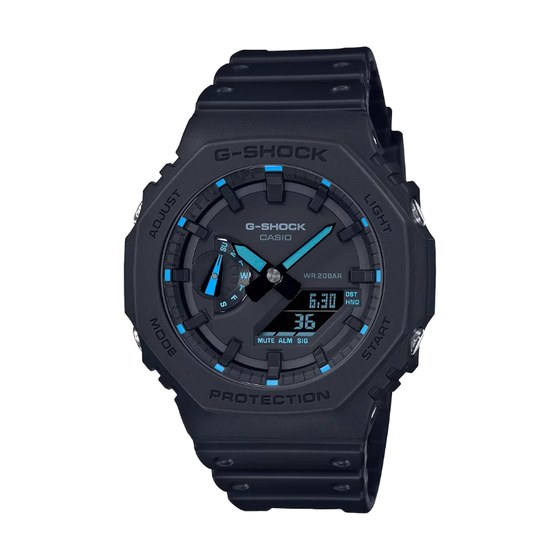
Casio
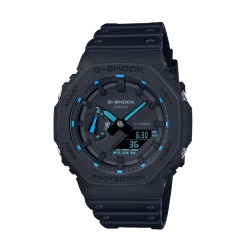
G-Shock - 2100 Series - Black Analog-Digital - GA-2100-1A2ER
Resin, 200 m, 45 mm
With a slim carbon case and a hybrid display, this is the G-Shock you'll keep at the office.
99,90 €
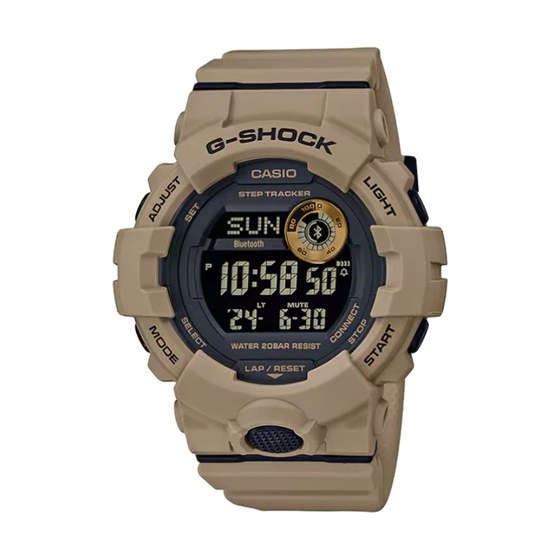
Casio
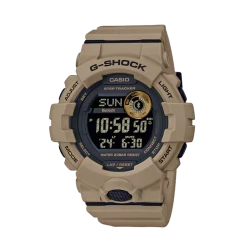
G-Shock - Resin - Brown - GBD-800UC-5ER
Resin, 200 m, 48 mm
Pedometer and app: the one that counts both sets and steps.
119 €
The differences between the various series are detailed in our G-Shock guide, and the digital displays are covered in the digital watch guide.
Chic Sportswear: The One That Never Goes Out of Style
There is one scenario where steel has the edge: when you need to take the watch from the living room to the office without switching wrists. In that case, you accept the extra weight in exchange for a look that isn't sporty.
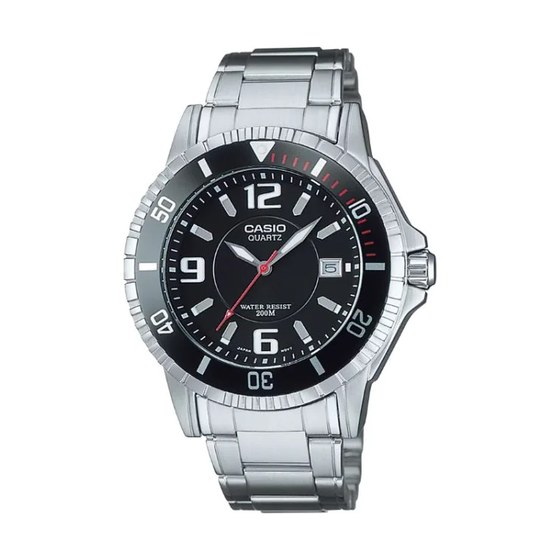
Casio
Collection - Men's - Water-Resistant to 20 ATM - Silver and Black - MTD-1053D-1AVES
Steel, 200 m, 44 mm
Brushed steel and 200 meters: she passes the meeting just like she does the pool.
89,90 €
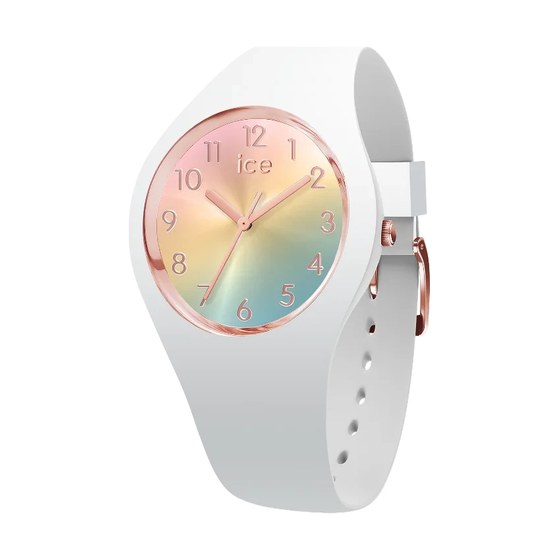
Ice-Watch
ICE Sunset - Rainbow
Silicone, 100 m, 34 mm
Women's collection: a rainbow gradient that stretches 100 meters without looking like it.
99 €

For women's models, the sports version is available in a 34-mm size without compromising water resistance.
The rest of the women's selection can be found in the " waterproof women's watches" section, and all sports models are in the " sports watches" section.
The Four Common Mistakes
Avoid leather. Leather absorbs sweat, stiffens as it dries, and eventually starts to smell. For a sports watch, choose a strap made of silicone, resin, or nylon—never leather—regardless of the price of the case.
Believing that 50 meters is enough. The 50-meter pool is suitable for a shower and a leisurely swim. It is not suitable for diving, competitive swimming, or repetitive exercise. For weekly use in a pool, 100 meters is the minimum.
Choosing a case that's too wide. If it's wider than 45 mm, the watch will snag on sleeves, bump against machinery, and feel uncomfortable on your wrist when you're working. Our guide to case diameter based on wrist circumference provides the exact measurement to aim for.
Don't forget to rinse it off. Chlorine and sweat damage the seals and the band. Thirty seconds under fresh water after your swim will extend the watch's life by several years—and yet that's the one thing nobody does.
For wrist measurements, see our guide to wrist circumference.
Frequently Asked Questions
Which watch should you choose for sports?
A quartz watch with a resin or silicone case, water-resistant to at least 100 meters, and a display that’s easy to read at a glance. A reasonable budget ranges from 40 to 120 euros: anything above that means you’re paying for features you don’t need for sports.
Do I need a watch that's water-resistant to 100 or 200 meters?
100 meters is sufficient for running, indoor activities, and swimming in a pool. 200 meters comes in handy for open-water swimming, freediving, or if you never take the watch off your wrist. In our inventory, 362 models are water-resistant to 100 meters, and many are water-resistant to 200 meters for less than 100 euros.
Is an automatic watch suitable for sports?
That's the worst choice. Repeated vibrations throw the movement off, the steel makes the wrist feel heavy, and the service costs more than the sports watch you could have bought. Quartz is superior in every way that matters here.
A digital watch or an analog watch for sports?
Digital, for two reasons: the stopwatch is instantaneous, and the backlit display is easy to read in the dead of night as well as in bright sunlight. The hands have an aesthetic advantage, but not a functional one.
What kind of watchband should you choose for a sports watch?
Silicone, resin, or nylon. They dry quickly, rinse off with water, and don't retain odors. Avoid leather: it stiffens, stains, and deteriorates after just a few uses.
How much should you spend on a sports watch?
Between 40 and 120 euros for most purposes. A well-chosen 40-euro watch does the same job as a 400-euro watch, because the criteria that matter in sports aren't the same ones that drive up prices in the watch industry.
Is a smartwatch a better choice?
It serves a different purpose: measuring performance rather than telling time. Its battery life is measured in days, compared to several years for a traditional sports watch, and it is more susceptible to damage from impacts. The two complement each other.
Can you wear a sports watch every day?
Yes, and that's actually their main selling point: they can handle anything. The limitation is aesthetic, not technical. A sporty-chic steel case solves this issue while maintaining the 200-meter rating.
One final note. In the watch industry, the price goes up with the level of complication, the materials, and the finish. None of these three factors makes a watch perform better in the rain, in a swimming pool, or on a treadmill. This is the only category where spending more can result in a lesser product, and it’s useful to know this before you walk into a store.