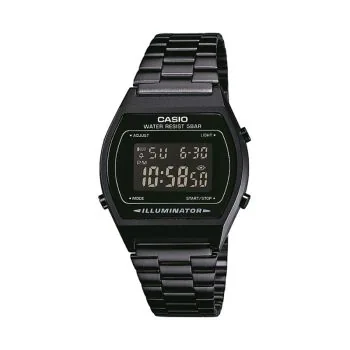


In summary: Club de la Montre is a French watch retailer that has sold more than 3,000 watches since 1968. A common misconception debunked in our catalog: the digital watch is not the commonplace style one might imagine—it is actually the rarest. Of the 1,207 active watches for which the display is documented, 1,023 are analog and only 108 are truly digital—that’s one in eleven. Our pick to start with: the Casio F-91W for 19.90 euros, which has been in continuous production since 1989.
We think we know what a digital watch is. The gray screen, the beep of the alarm, the recess watch. That's the image it's carried for forty years—and it's wrong in almost every respect.
Digital is actually the most accurate, most self-contained, and most readable format in the dark. Since the return of 1980s-style watches, it has also become one of the few areas where a watch costing less than 60 euros stands out just as much as a 600-euro model. Here’s what you need to know, along with nine vetted models available for order on August 27, 2026, ranging from 19.90 to 299 euros.
What Digital Does Better Than a Needle
Accuracy. A digital quartz movement loses a few seconds per month, whereas a mechanical watch loses a few seconds per day. Over the course of a year, the difference amounts to minutes on one hand and hours on the other.
Battery life. The battery in a basic digital watch lasts seven to ten years. The F-91W is rated for seven years, and some models in the Casio Collection last up to ten years. No automatic watch can run for ten years without being serviced.
Reading in the dark. A backlit screen is instantly readable, without having to wait for the luminescent material to charge up. It's the only type of display that can be used in the middle of the night without causing glare.
Truly useful features. A stopwatch accurate to the hundredth of a second, multiple alarms, a second time zone, and a countdown timer. On an analog watch, each of these features adds a complication and often costs several hundred euros.

Brushed steel has taken the foxglove from the sports field to the office. That's what the 2020s are all about.
Foxglove is rare, and this can be verified
We document the display type for each item. Here is what the active catalog shows as of August 27, 2026:
| Display | Models | Part |
|---|---|---|
| Analog, with hands | 1 023 | 84,8 % |
| Digital | 93 | 7,7 % |
| Anadigital, both | 76 | 6,3 % |
| Digital | 15 | 1,2 % |
One in eleven watches displays the time in numerals. That’s not many, and that’s precisely what makes this style distinctive: in a meeting room, the digital watch is the only one you notice. The digital watch section features all 83 models currently in stock, including men’s styles.
Three vintage wines for less than 60 euros
This is the entry-level model, and it hasn't changed in forty years. Rectangular case, steel or resin, gray dial, alarm, and chronograph. These three models look just as good on a twenty-year-old as they do on a fifty-year-old.
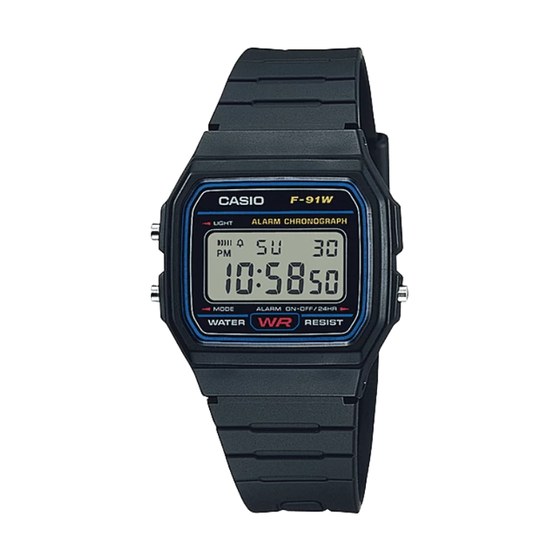
Casio
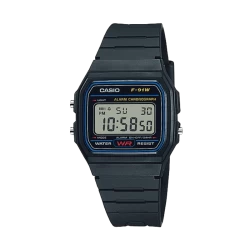
Timeless Collection - Black Resin Bracelet - F-91W-1YEG
38 mm case, resin
In continuous production since 1989, with a claimed battery life of seven years.
19,90 €
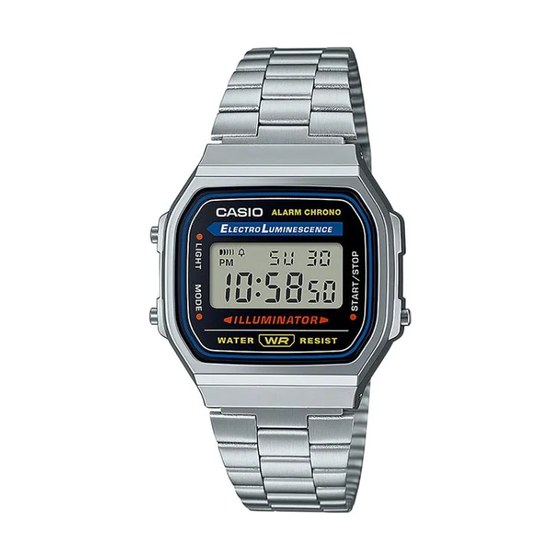
Casio
Vintage Iconic - Unisex - Silver and Black - Highlighter - A168WA-1YES
36 mm case, steel
The same design in brushed steel: the version that fits under a shirt sleeve.
38 €
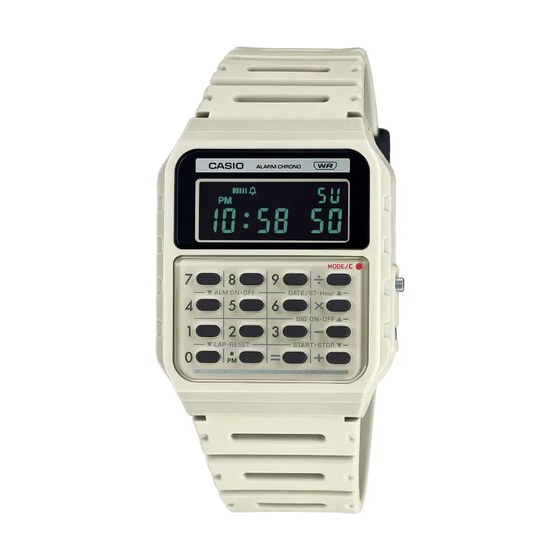
Casio
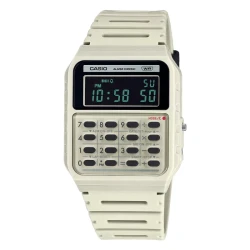
Vintage Heritage Colors Retro Calculator, Ivory Beige | CA-53WB-8BEF
43 mm case, water-resistant to 200 m
A cream-colored wrist calculator with "200 meters" on the back. Rare.
59,90 €
Details on the A168, A158, and A1000 models can be found in our Casio Vintage guide, and information on the entire brand is available in the comprehensive Casio guide.
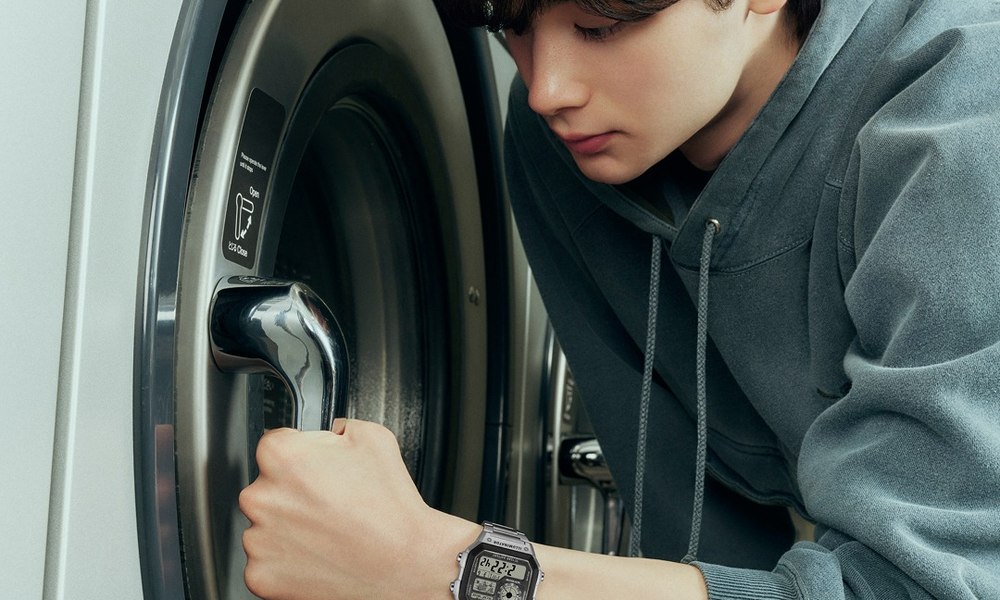
The format hasn't changed since 1980. It's the context surrounding it that has changed.
Color, and the little wrists
The other half of the story is feminine—and often overlooked. The digital display extends down to 24 mm from the case—a depth that almost no analog watch can reach—and it accommodates colors that a traditional dial simply couldn’t handle.
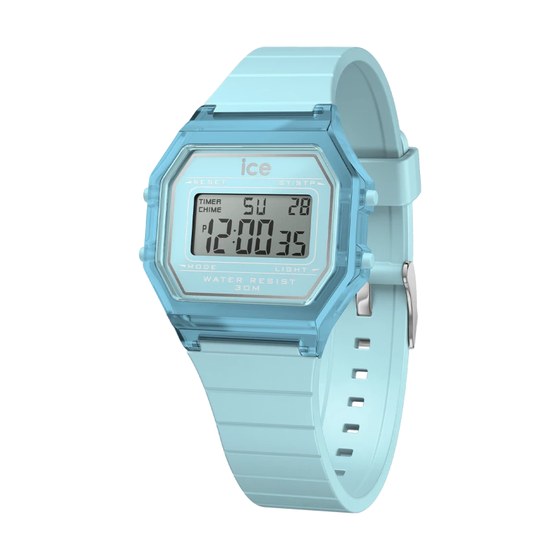
Ice-Watch
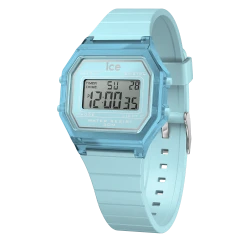
ICE Digit Retro - Sky Blue
32 mm case, silicone
Translucent sky blue: foxglove embraced as a pop of color.
49 €
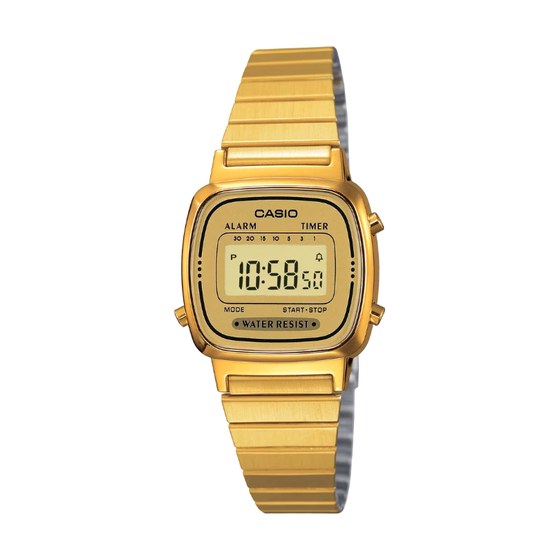
Casio
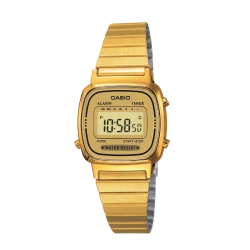
Vintage Iconic - Mini - Gold - LA670WEGA-9EF
24 mm case, gold-plated
The smallest case in our digital catalog, made of gold-plated steel.
59,90 €
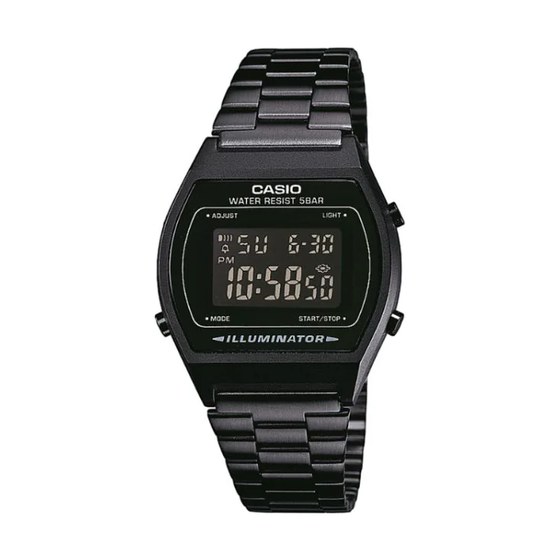
Casio
Vintage Edgy Collection - Black Chronograph - B640WB-1BEF
35 mm case, water-resistant to 50 m
Smoked dial and black steel: the dark version of the vintage style.
59,90 €

At 24 mm from the case, the digital display goes where the needle doesn't go.
The colorful models are grouped under the " Ice-Watch" section, and the children's sizes are grouped under " Children's Digital Watches."
The Indestructible One: The G-Shock
You can't talk about digital technology without mentioning it. Designed in 1983 to survive a ten-meter fall, the G-Shock is the only watch whose durability is a stronger selling point than its style. The three models below are water-resistant to 200 meters.
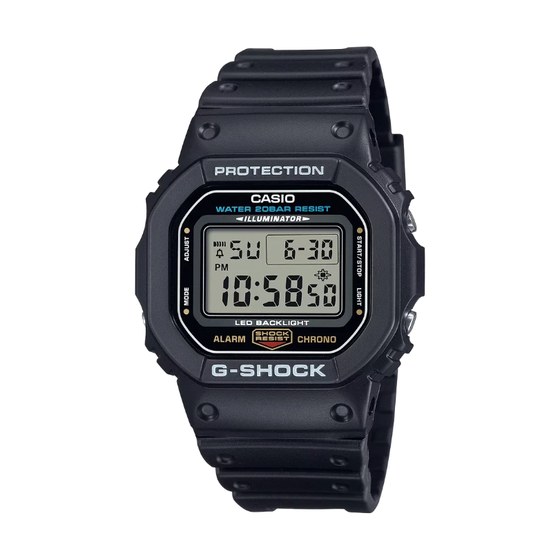
Casio
G-Shock - 5600 Series - Digital - DW-5600UE-1ER
42 mm case, water-resistant to 200 m
The classic square, in its most minimalist form.
99,90 €
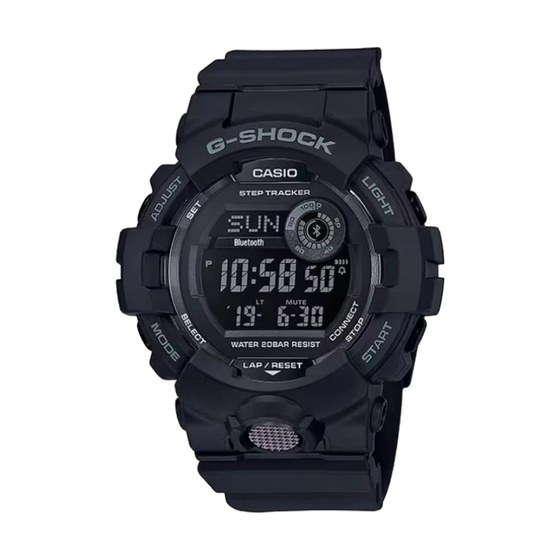
Casio
G-Shock - G-Squad - Black - GBD-800-1BER
48 mm case, water-resistant to 200 m
Pedometer, app, and 200 meters: the G-Shock that counts your steps.
119 €
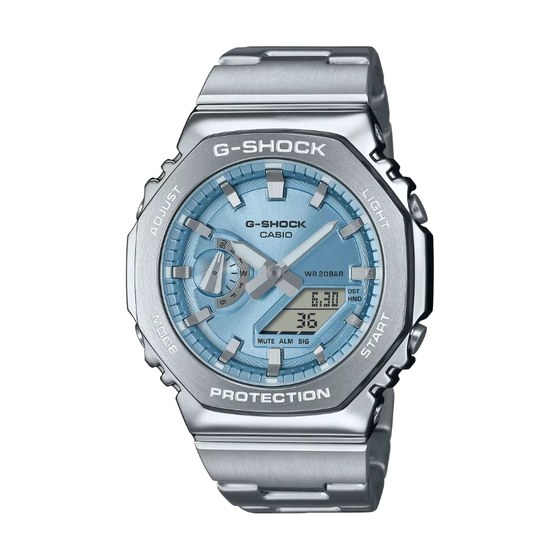
Casio
G-Shock - GM-P2100 Series - Stainless Steel - GM-2110D-2AER
44 mm case, analog-digital
Steel case and hybrid display: the G-Shock you can wear to the office.
299 €
The differences between the various series are explained in detail in our G-Shock model guide, and the issue of actual water resistance is covered in the guide to water-resistant watches.
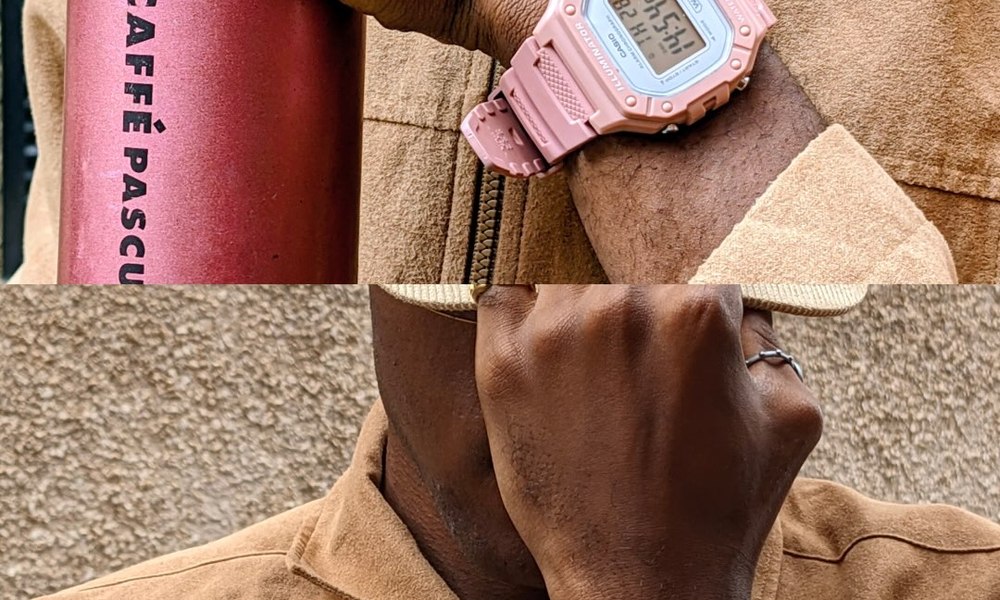
The G-Shock has moved beyond the sports field. Today, people wear it for its design.
Digital, anadigital: the difference that matters
An analog-digital watch combines hands and a display. Our catalog features 76 such models, compared to 108 purely digital ones. There’s a real advantage to this: you retain the ability to tell the time at a glance—which is still faster with hands—while adding a stopwatch and alarms via the display.
There’s a downside, too: having two display systems on the same dial makes it harder to read, and the screen takes up space that reduces the size of the hour markers. Our advice: go for the analog-digital hybrid if you’re used to an analog watch, and the fully digital model if you’re looking for maximum readability.
How to Choose the Right One
The case in front of the screen. A digital watch with a diameter of 24 to 36 mm can be worn anywhere, including under a sleeve. Anything over 45 mm enters G-Shock territory, where the watch’s bulk is a given. Our guide to selecting the right diameter based on wrist size explains how to choose.
Resin or steel—they’re not the same thing. Resin is lightweight, water-resistant, and costs less than 40 euros. Steel is heavier and more prone to scratches, but it elevates the watch from a sporty style to a dressier one.
Check the lighting. Not all digital watches are lit the same way. A simple green indicator light isn't very bright, while a fully backlit screen is easy to read at a glance. Casio's "Illuminator" designation refers to the latter.
Check the water resistance rating on the back. Many vintage Digitalis watches are rated for 30 meters, which rules out swimming. G-Shock watches are rated up to 200 meters. That number makes all the difference, and you can’t tell just by looking at the style.
For sizing, see our wrist-size guide, and for retro styles in general, see the guide to vintage men's watches.
Frequently Asked Questions
Is a digital watch more accurate than an analog watch?
Yes, definitely. A digital quartz movement loses a few seconds a month, whereas a mechanical watch loses a few seconds a day. Over the course of a year, the difference amounts to a few minutes on one end versus several hours on the other.
How long does the battery in a digital watch last?
Seven to ten years for simple models. The Casio F-91W is rated for seven years, while some models in the Casio Collection last up to ten years. Connected models or those with sensors consume much more power and often last less than two years.
What is the difference between digital and anadigital?
Digital watches display the time using only numbers on a screen. Analog-digital watches combine hands with a secondary screen. Our catalog includes 108 purely digital models and 76 analog-digital models: the two formats coexist, but they are not intended for the same use.
Is it okay to wear a digital watch to the office?
Yes, provided you choose steel over resin and a case under 38 mm. A vintage brushed-steel watch is perfectly acceptable in a professional setting, whereas a resin G-Shock is much less so.
Are digital watches waterproof?
It depends entirely on the model. Many vintage watches are rated for 30 meters, which isn’t enough for swimming. G-Shock watches are rated for 200 meters. The rating is engraved on the back of the case and can’t be determined by the watch’s style.
What is the most famous digital watch?
The Casio F-91W, launched in 1989 and in continuous production ever since. Its resin case, simple display, and seven-year battery life have made it the world’s best-selling watch. It’s priced at 19.90 euros in our catalog.
Is a digital watch suitable for a small wrist?
That's actually one of its advantages. The case size goes down to 24 mm, whereas analog options generally stop at around 28 mm. The mini models in gold-plated steel are designed specifically for this purpose.
How do I set a Casio digital watch?
The operating principle is consistent across the entire product line: the button at the bottom left cycles through the modes; the button at the top left enters the settings mode when pressed and held; and the buttons on the right adjust and confirm the value. The exact instructions vary by module, whose number is engraved on the back.
A final thought. The digital watch has long been considered the lowest form of timepiece—something you wear for lack of a better option. The catalog tells a different story: it is the rarest, most precise, and longest-lasting format, and it is the only category where a twenty-euro watch has become a fashion statement. Nine out of ten watches have hands. The tenth doesn’t need them.