
In summary: Club de la Montre is a French watch retailer that has sold more than 3,000 watches since 1968. The most useful tip for parents: for a child, a watch with hands is better than a screen. Our children’s section features 81 active models, including 33 analog watches compared to just 17 digital ones—and that’s no coincidence: an analog watch teaches children how to tell time, while a digital screen simply displays it. Our top pick for beginners: the Pic et Poc educational watch for 19.90 euros.
What makes the start of the school year so special is that it suddenly makes time important. You have to be ready by 8:20 a.m., leave at 4:30 p.m., and know how long recess lasts. For many children, this is the moment when time ceases to be an abstraction and becomes a daily constraint.
It’s also the best time to give someone their first watch—as long as you choose the right one. Here’s how, with nine handpicked models available for order on September 1, 2026, ranging from 19.90 to 69 euros.
Hands or numbers: the only real debate
Most parents' first instinct is to choose a watch with a digital display, thinking it will be easier. It's actually the exact opposite. A screen shows 8:20, and the child reads two numbers: he isn't learning anything; he's just deciphering the time.
An analog clock, on the other hand, shows the time as a position on a circle. The child sees that the long hand is moving downward, that recess is approaching, and that there’s still a quarter of a turn left. It is this spatial representation that helps children understand duration, and no digital display can replace it.
Our children's catalog reflects this trend: of 81 active SKUs, 33 are analog and 17 are digital—nearly twice as many. The remaining 20 are either waterproof or connected. The shelves are separated: analog on one side, digital on the other.
A good children's watch is one that a child checks on his own, without being asked.
Ages 4 to 6: The Watch That Teaches You to Tell Time
At this age, children don't yet know how to tell time; they're still learning. So-called "educational" watches are designed for this purpose: the minutes are written out in full around the dial, the hands are different colors, and sometimes there's a color-coding system that distinguishes the hours from the minutes.
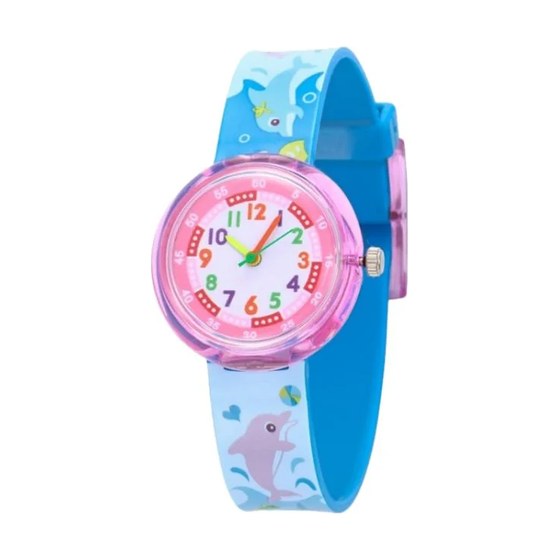
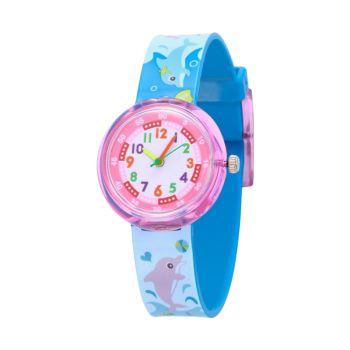
Pic and Poc
Educational - Dolphins
Educational dial, 30 mm
The minute markings around the dial and two hands of different colors.
19,90 €
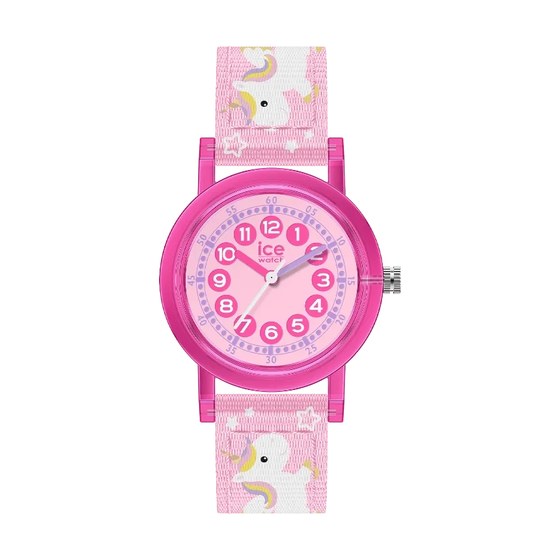
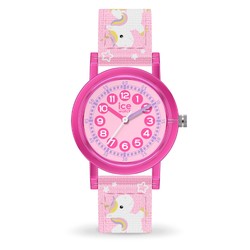
Ice-Watch
ICE Learning - Pink Unicorn
Educational dial, 28 mm
The same principle applies to unicorns: the child learns without realizing it.
39 €
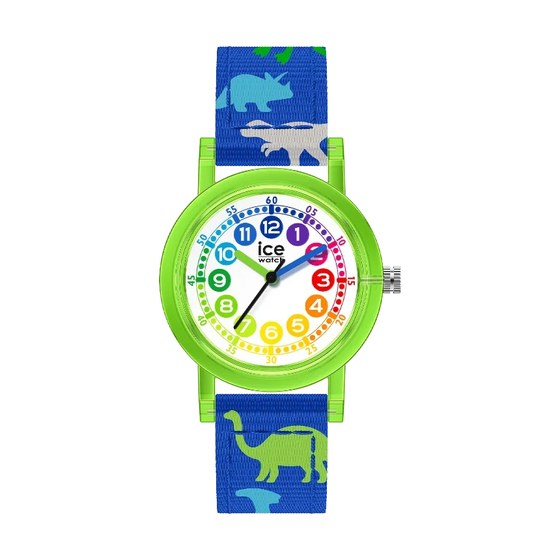
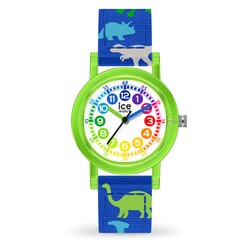
Ice-Watch
Ice Learning - Green Dinosaur
Educational dial, 28 mm
Dinosaur design, green silicone, water-resistant to 30 meters.
39 €
Price matters less than you might think at this age: the first watch will be lost, left behind at the pool, or traded in the schoolyard. It’s better to spend 20 euros on something well-chosen than 80 euros on something you’ll regret.
Ages 6 to 10: The First Real Watch
Once you’ve earned your watch, it becomes your own. This is the age when the design matters more than the brand, and when durability becomes a real factor: it will get dropped, get wet, and end up in the sand.
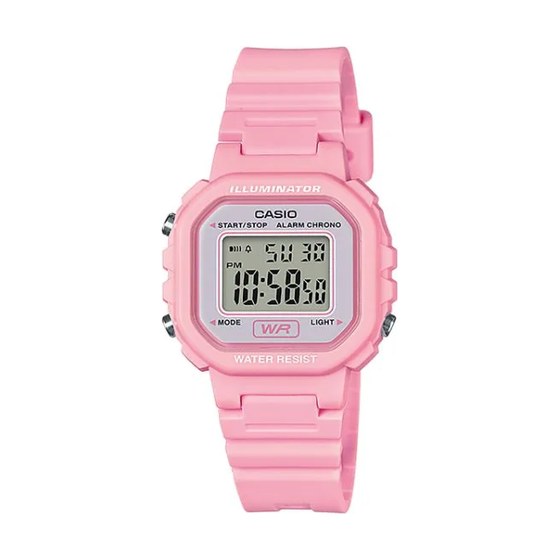
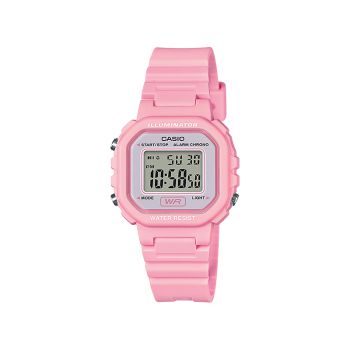
Casio
Collection - Girls - Pink Resin - LA-20WH-4A1EF
30 mm case, resin
Compact, lightweight, ten years of battery life: the one you forget to recharge.
29,90 €
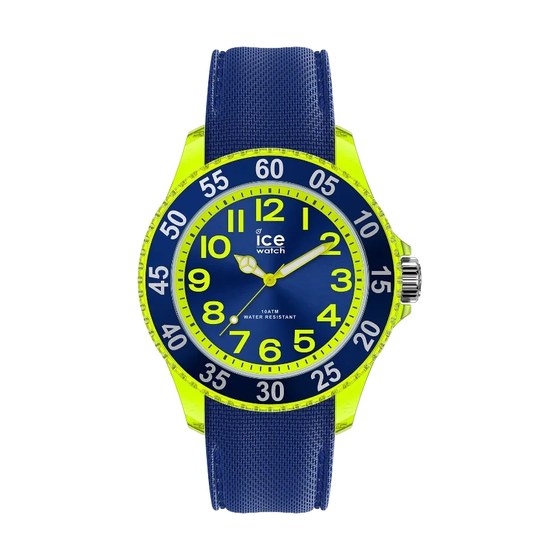
Ice-Watch
ICE Cartoon - Spaceship
35 mm case, water-resistant to 100 m
Space-themed design and 100-meter water resistance: she wears it to the pool.
69 €
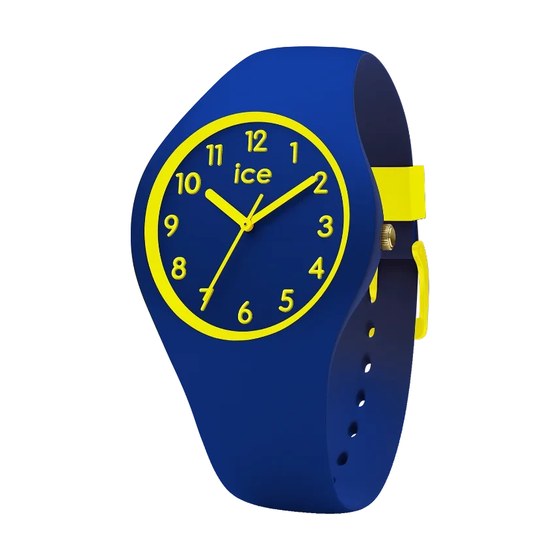
Ice-Watch
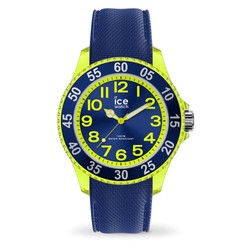
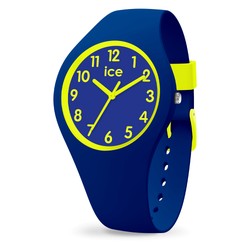
ICE Ola Kids - Rocket
34 mm case, water-resistant to 100 m
Silicone rocket: the model kids choose all by themselves.
69 €
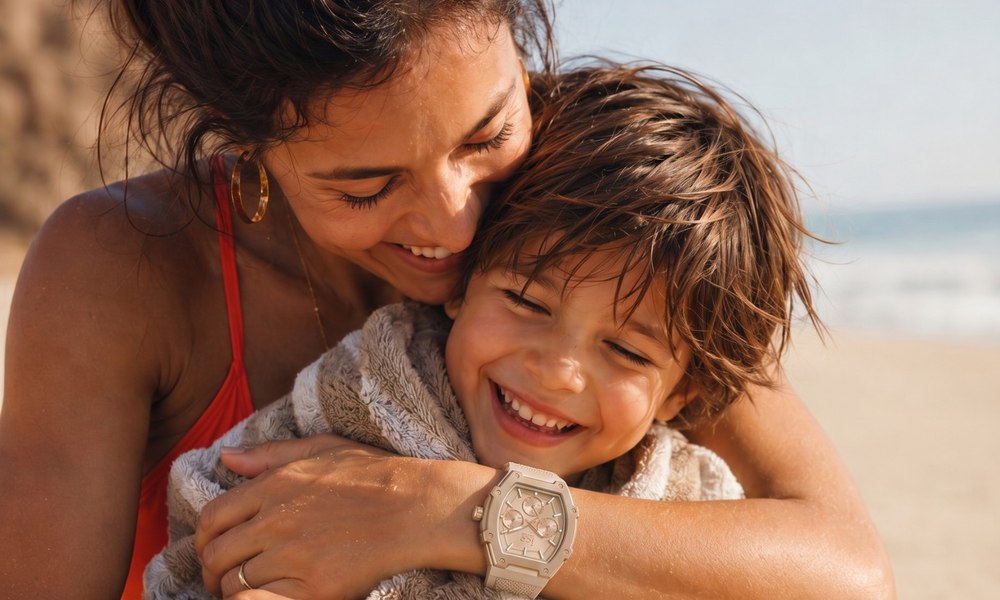
Around the age of 8, a watch stops being a gift and becomes a personal possession.
Water resistance is worth taking a closer look at: many children's watches are rated for 30 meters, which isn't enough for swimming. Our guide to water resistance explains what each rating actually allows, and the children's water-resistant watches section features the 20 models in question.
Ages 10 and up: the one that lasts until middle school
Childish designs become a problem, but durability remains a necessity. This is the stage where children transition to small-sized adult styles—often digital—that they will keep for several years.
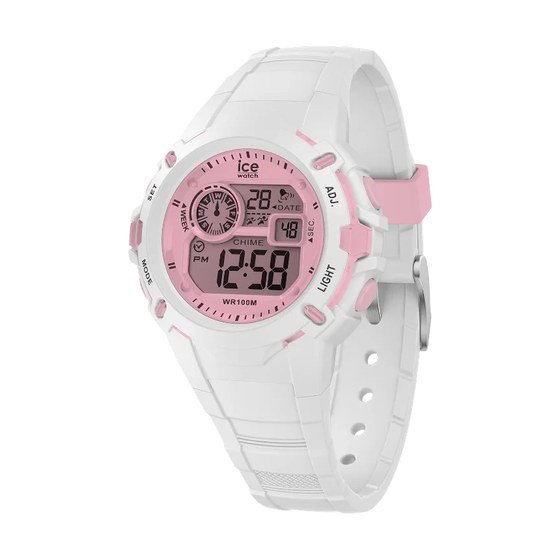
Ice-Watch
ICE Digit Explorer - White Pink
41 mm case, water-resistant to 100 m
Digital Explorer: stopwatch, alarm, backlight.
49 €
Ice-Watch
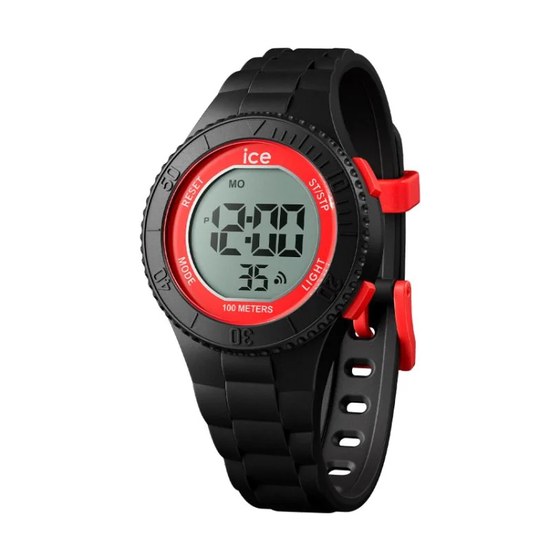
Ice Digit - Kids - Black and Red, Small
35 mm case, water-resistant to 100 m
The classic, plain digital design that's perfect for middle school.
59 €
Sector
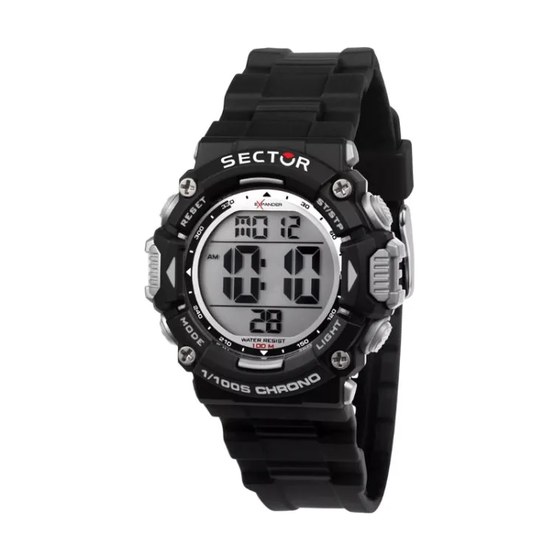
Ex-32 - Black and Silver Silicone - R3251544001
40 mm case, water-resistant to 100 m
Black and silver silicone: the first watch that's no longer just for kids.
64 €
How these displays work is explained in detail in our guide to digital watches, and the issue of case size is covered in the guide to wrist size: a 10-year-old’s wrist rarely measures more than 14 cm.
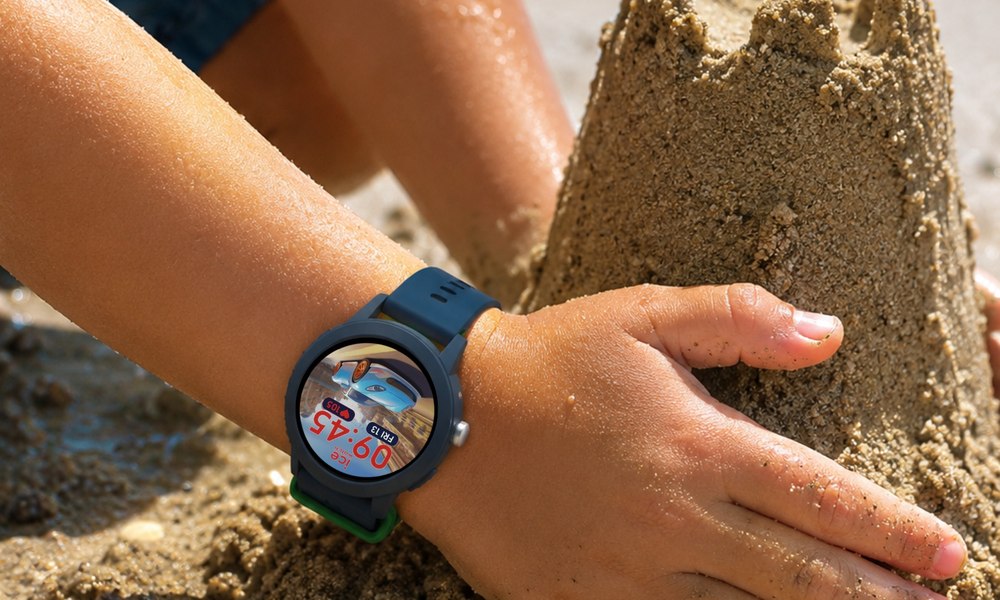
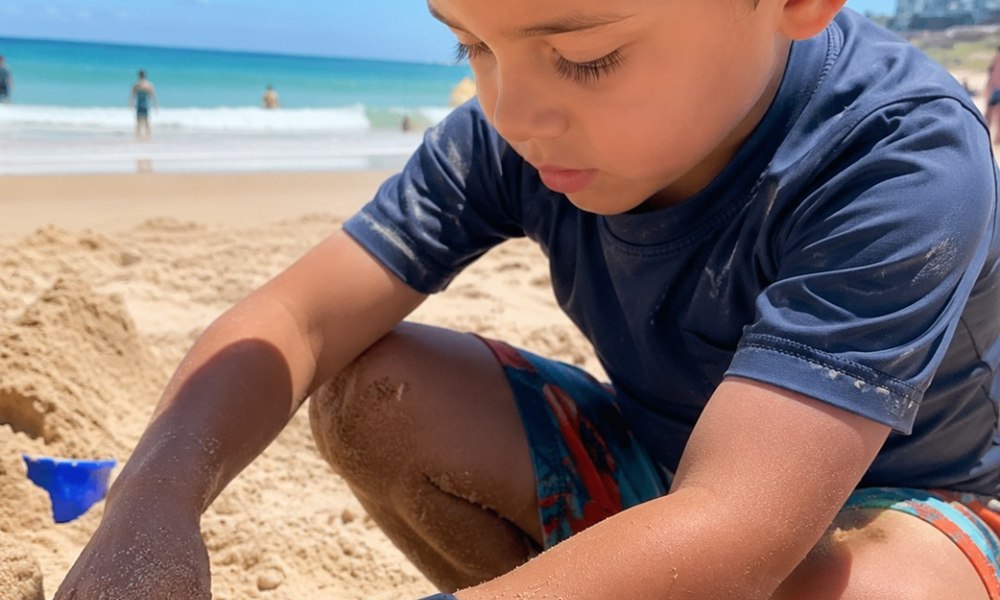
Sand, salt water, impacts: A children's watch endures in one summer what an adult's watch endures in ten years.
What Causes a Child's Watch to Break
Sand, before any impacts. The case can withstand drops, but the seals are much less resistant to grains of sand that get lodged inside. A quick rinse with fresh water after a day at the beach is all it takes—and no one ever does it.
The strap, not the movement. On children's watches, the part that breaks first is almost always the clasp or loop on the silicone strap. Make sure the strap is replaceable before buying.
The pool is 30 meters deep. "30 meters" does not mean it is thirty meters deep; it is a laboratory measurement. For a pool, you need 100 meters, without exception.
The growing wrist. A child’s wrist circumference increases by two centimeters between the ages of 6 and 10. A silicone bracelet with multiple holes accommodates this growth, whereas a stiff leather bracelet does not.
Frequently Asked Questions
At what age should you give a child their first watch?
Around the age of 5 or 6, when school begins to structure the day with a schedule. Before that, a watch is just a piece of jewelry with no practical use. An educational watch, with the minutes written around the dial, complements learning rather than replacing it.
An analog watch or a digital watch for a child?
A watch with hands, without hesitation, as long as the child is learning to tell time. A dial shows the elapsed time as a position on a circle—something no digital display does. Digital watches regain the advantage around age 10, when the child has mastered telling time and a stopwatch becomes useful.
What size case is best for a child?
From 28 to 35 mm, depending on age. A 6-year-old’s wrist measures about 13 cm in circumference, while a 10-year-old’s wrist rarely exceeds 14 cm. If the watch is wider than 38 mm, it slips and makes writing difficult.
What level of water resistance should a children's watch have?
100 meters if the child goes to the pool, which is almost always the case. The "30 meters" rating only covers rain and handwashing: it does not withstand diving or arm movements in the water.
How much should you spend on a children's watch?
Between 20 and 40 euros for a first watch, which will likely be lost or broken. Between 40 and 70 euros for children ages 8 and up, provided they take good care of it. Beyond that, you’re paying more for the brand than for practical use.
Is a smartwatch suitable for a child?
It meets a different need—that of connecting with the child, not of teaching them to tell time. Its battery life is measured in days, whereas a traditional watch lasts for years, and its screen draws attention in class. The two complement each other rather than replace one another.
How can you teach a child to tell time using a watch?
Start with the full hours, then the half-hours, then the quarter-hours, on a clock face where the minutes are labeled. A common mistake is trying to teach both hands at the same time: it’s better to mentally ignore the minute hand during the first few weeks.
What kind of watch should I get for an 8-year-old girl?
A 28- to 32-mm case on a silicone strap, water-resistant to 100 meters, featuring a design she’ll have chosen herself. At this age, the dial design matters more than the brand, and the child’s choice makes all the difference in whether or not she’ll actually wear it.
You can view the entire selection in the children's watches category, and find gift ideas by budget in our watch gift guide.
A final word for parents. A watch is often the first item a child is truly responsible for: they have to put it on in the morning, make sure not to lose it, and remember to take it off before showering. This is no small matter. Before it’s a timekeeping device, a child’s first watch is a lesson in independence, and that’s why it leaves such a lasting impression.