
The Essentials in Five Lines
To swim, you need 100 meters, not 30. Thirty meters is a laboratory measurement of static pressure that doesn't apply to either a swimming pool or a shower. Of the 353 women’s watches in our catalog, 173 are rated for 30 meters or less, and only 93 are rated for 100 meters. Water resistance does not depend on the diameter: a 28-mm case is just as water-resistant as a 40-mm case. And it lasts only if the gaskets are replaced every two to three years.
A watch that lets in water doesn't break down right away. The dial becomes cloudy, a halo appears under the crystal, and a few weeks later, the movement has stopped. The most frustrating part is that the watch was labeled as water-resistant, and that label was accurate.
It all comes down to a misunderstanding about the numbers. Here's what they mean, and how to choose a watch you'll never want to take off.

The watch you never take off is the one that can handle everything the day throws at it.
Thirty meters doesn't mean thirty meters
The engraving on the back corresponds to a laboratory test conducted under static pressure, with the watch held stationary. It does not indicate how deep you can go; it indicates the pressure the case withstood for a few minutes.
However, when an arm enters the water, the instantaneous pressure increases far beyond the displayed value. That is why the actual scale is not at all intuitive:
- 30 meters: rain, handwashing. Nothing more.
- 50 meters: shower, dishes, splashes.
- 100 meters: swimming in a pool or in the ocean, without even thinking about it.
- 200 meters: diving from the platform, water sports, freediving.
Here’s a statistic that should give you pause: of the 353 women’s watches currently available in our catalog, 173 are water-resistant to no more than 30 meters—that’s nearly one out of every two—and only 93 are water-resistant to 100 meters. In other words, half of the women’s collection is designed for a wrist that stays dry.
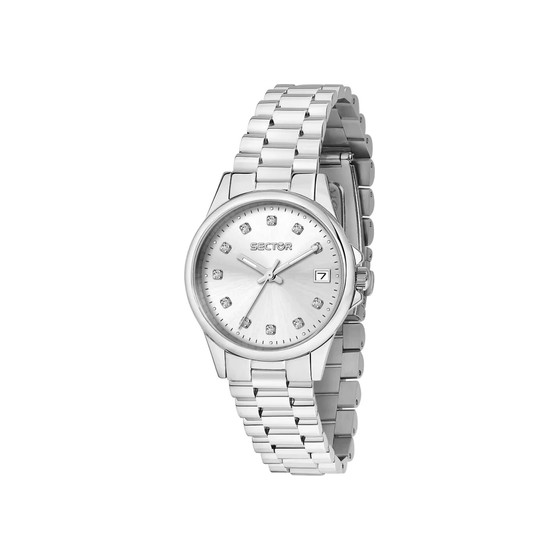
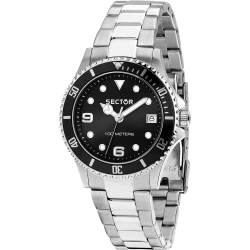
Sector
230 32 mm steel
Steel, 100 m, 32 mm
Thirty-two millimeters and one hundred meters: the size has no effect on water resistance.
129 €
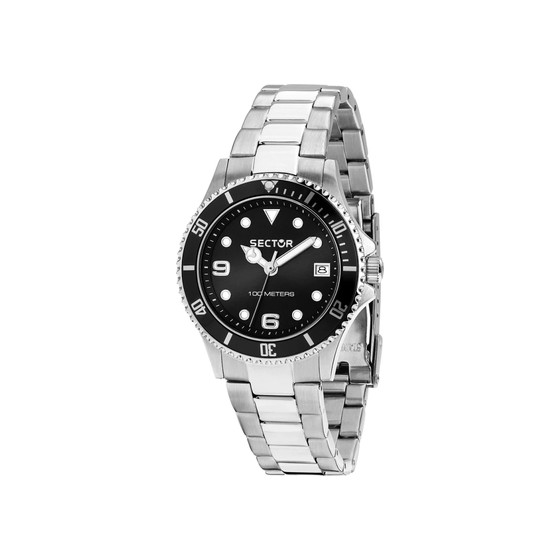
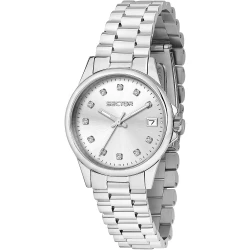
Sector
230 35-mm steel
Steel, 100 m, 35 mm
The same specifications in 35 mm, for a slightly wider wrist.
129 €
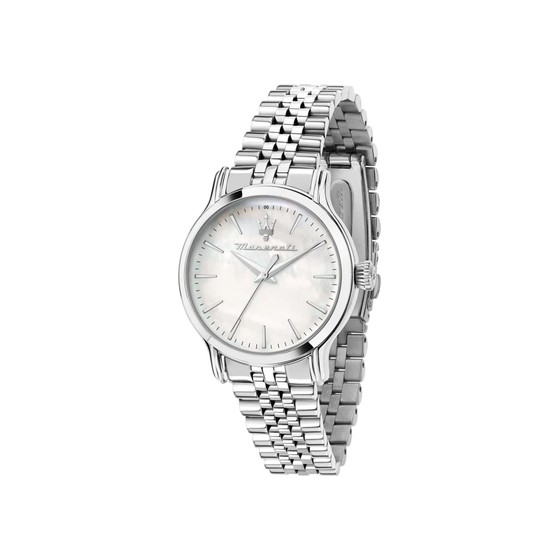
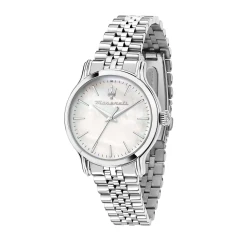
Maserati
Epoca Lady 3H
Steel, 100 m, 34 mm
Steel dial and case, without compromising on the 100-meter water resistance.
220 €
ATM, BAR, WR: three ways of saying the same thing
The dials mix different units of measurement without any explanation. One atmosphere equals ten meters, and one bar does too. So 5 ATM, 5 BAR, and WR 50 all mean exactly the same thing: fifty meters—suitable for showering but not swimming. 10 ATM, 10 BAR, and WR 100 mean one hundred meters, and swimming becomes possible.
A watch with no such indication is not water-resistant at all. This is not an oversight; it is a fact.
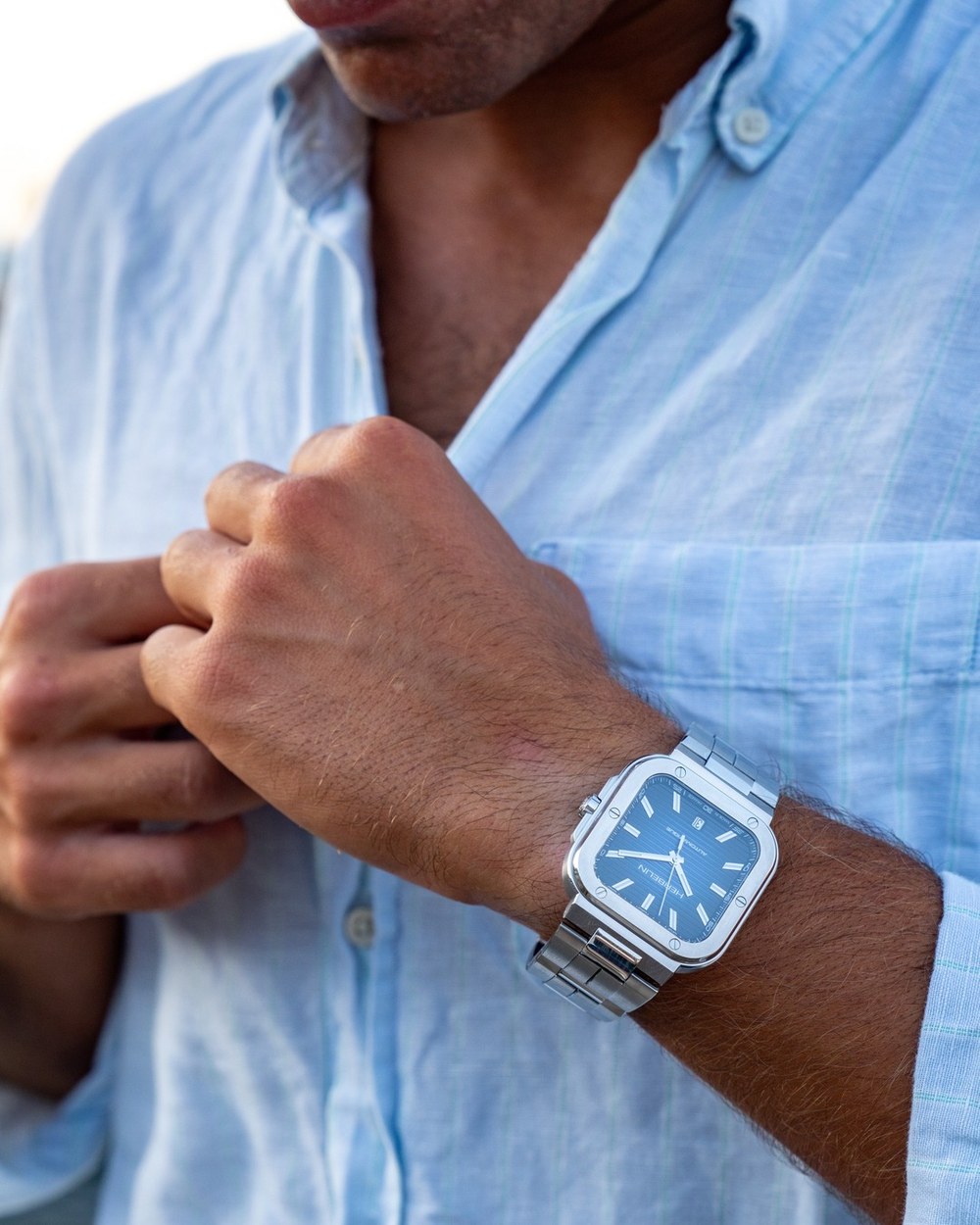
Five ATMs, five BARs, and WR 50 all say the same thing: fifty meters—a shower, but no swimming.
The diameter has nothing to do with watertightness.
This is the most costly misconception, because it leads people to buy a watch that’s larger than necessary. A 28-mm caseis just as water-resistant up to 100 meters as a 40-mm case: water resistance depends on the gaskets, the screw-down case back, and the crystal, not on the surface area of the dial.
The diameter should therefore be chosen based solely on the wrist. For wrist circumferences under 16 cm, aim for 28 to 34 mm. For larger wrist circumferences, go up to 38 mm without the watch looking too big. Our size guide details how to take the measurement, which is done using a strip of paper.
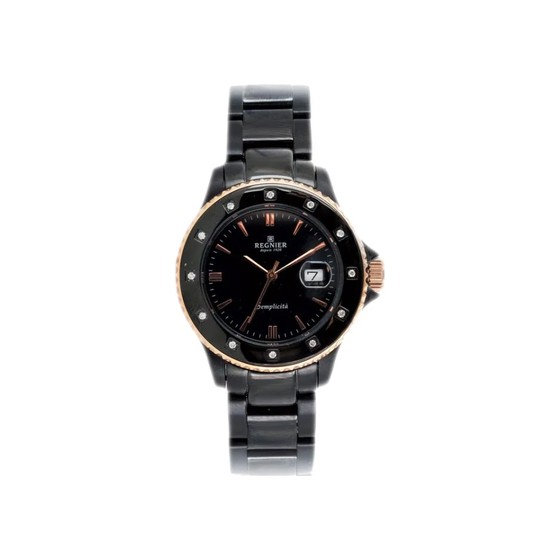
Régnier
Dual-Material Ceramic
Ceramic and steel, 100 m
Ceramic doesn't scratch or lose its luster when exposed to salt—making it a great choice for the beach.
389 €
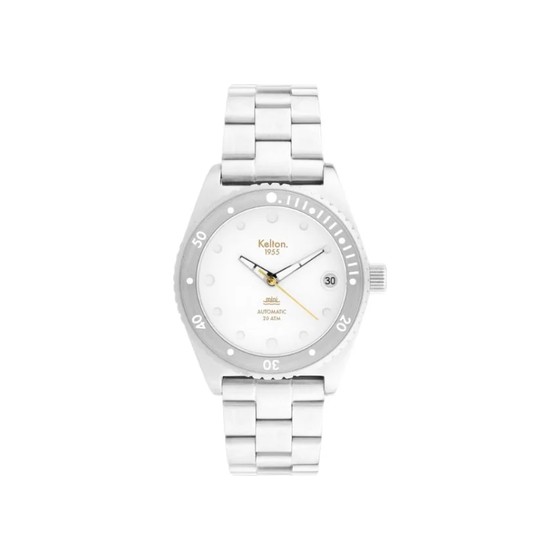
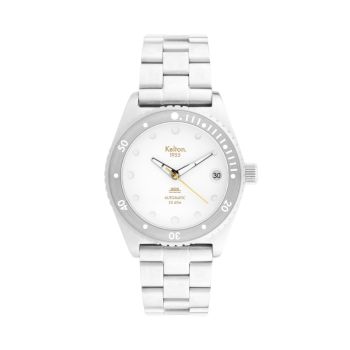
Kelton
1955 White Mini
Steel, 200 m, 34 mm
Two hundred meters on a 34-mm case, assembled in Lectoure in the Gers.
390,74 €
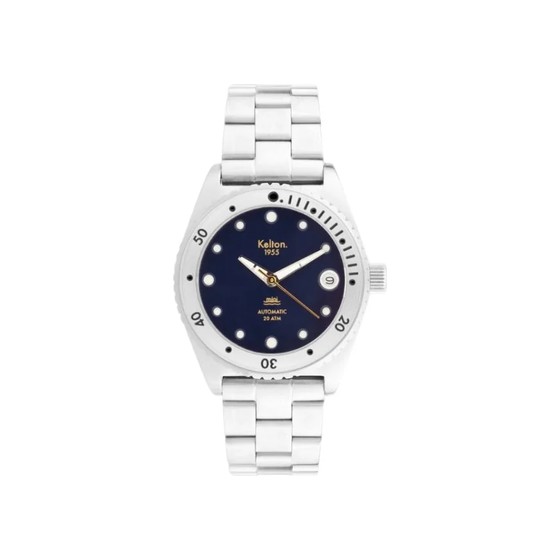
Kelton
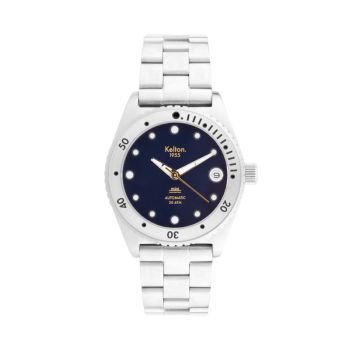
1955 Mini Navy
Steel, 200 m, 34 mm
The same one in midnight blue: French diving in 34 mm format.
485,92 €
What Really Ruins a Water-Resistant Watch
The seals, which have a service life of
The advertised water resistance applies only to new gaskets. They harden over time due to heat and exposure to chemicals. Plan on having it serviced every two to three years if you swim, and always after a battery replacement, since the case has been opened. This is the number one cause of water ingress seen in repair shops.
The crown is left pulled back
A crown that isn't pushed down properly will compromise the watch's water resistance, regardless of the engraving. On models with a screw-down crown, a quarter-turn is enough to open the seal. Make it a habit to check this before entering the water.
Thermal Shock
Going from sunbathing to cold water puts strain on the seals and can cause condensation to form under the glass. It's no big deal if the watch is in good condition, but it does put it under additional stress.
Salt and chlorine on the wristband
They do not corrode steel, but they do cause light-colored straps to lose their luster and wear down the seals. Rinsing with fresh water after use, with the crown pushed in, doubles the strap's lifespan.
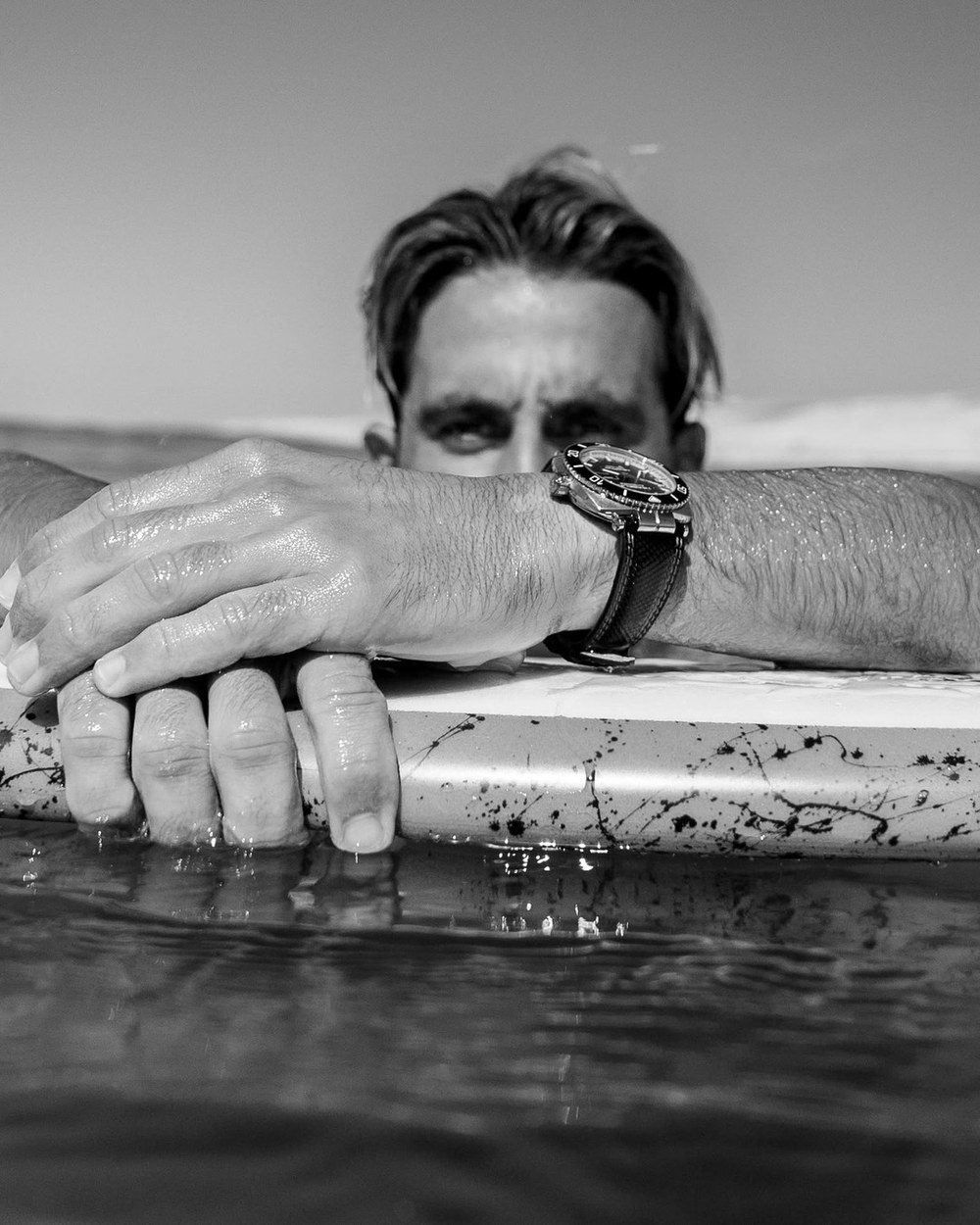
Same thresholds, same gaskets, same crown to check: watertightness isn't affected by radii.
And the same rule applies to him
None of the above applies exclusively to women’s watches. The water resistance ratings are identical, the gaskets age the same way, and the crown is checked in the same manner. The difference is statistical: the men’s segment proportionally includes more models rated to 100 meters, because sports watches are better represented there. Our sports watch guide and our feature on swimming cover this topic from a men’s perspective.
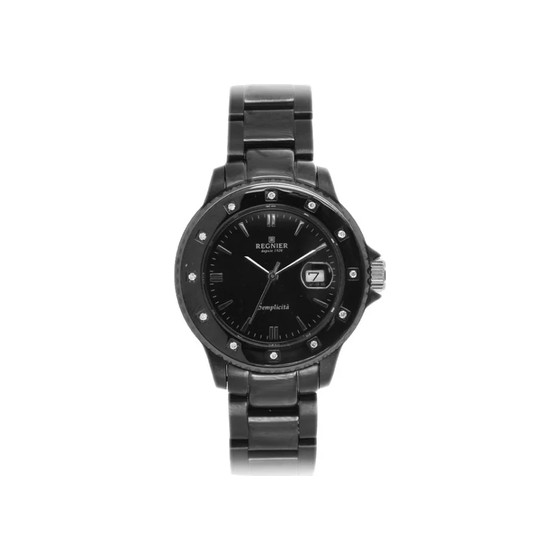
Régnier
Black Ceramics
Ceramics, 100 m
All-black, ceramic, and waterproof—so you never have to take it off.
499 €
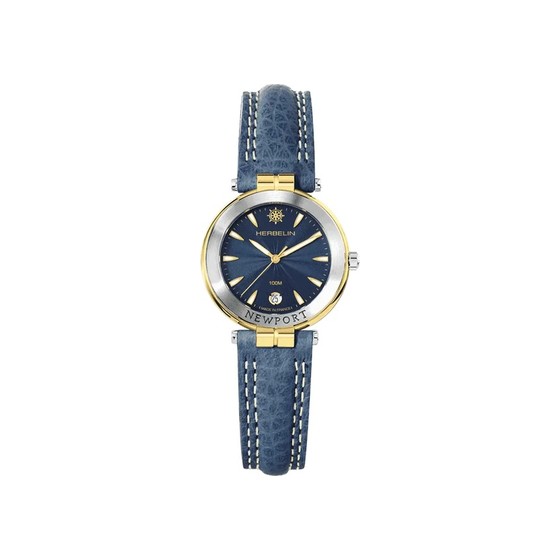
Michel Herbelin
Newport Originals
Steel, 100 m, 29 mm
Twenty-nine millimeters, assembled in Charquemont—that's still a hundred meters.
549,89 €
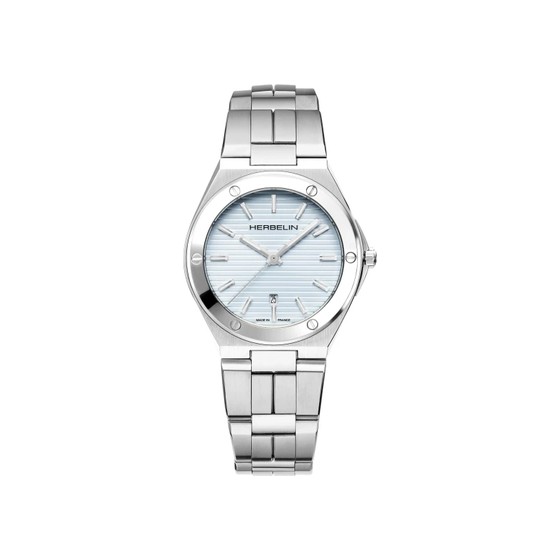
Michel Herbelin
Cap Camarat Arctic Blue
Steel, 100 m
The yachting spirit of the Var coast, in steel and arctic blue.
570 €
Or search the website
The women's water-resistant selection includes the relevant models, and the water-resistant section covers both categories. For more athletic use, sports watches are water-resistant up to 200 meters. If the watch is intended for a teenage girl, our teen watch guide applies exactly the same criteria.
Frequently Asked Questions
What level of water resistance is needed to swim with a watch?
One hundred meters. That’s the threshold at which swimming is safe, whether in a pool or the ocean. Below that, the watch can withstand water but not the movement of the arm, which increases the instantaneous pressure. Of the 353 women’s watches in our catalog, only 93 meet this threshold.
Can a watch rated for 30 meters be worn in the shower?
No, and that's the most common misconception. Thirty meters is a laboratory measurement of static pressure. That covers rain and hand washing. A shower adds heat, which expands the joints, and the pressure of the water stream. You need 50 meters for a shower and 100 for swimming.
What does "5 ATM" mean on a watch face?
One atmosphere is equivalent to ten meters, so 5 ATM means 50 meters and 10 ATM means 100 meters. Both notations appear on watch dials without any explanation. A dial marked “WR 50” or “5 BAR” means exactly the same thing as “50 meters.”
Do chlorine and seawater damage a watch?
It doesn't affect the case if it's made of steel or silicone, but they corrode the seals and cause light-colored straps to lose their luster. The one simple step that makes all the difference is to rinse the watch with fresh water when you get out of the water, with the crown pushed in tightly. One minute is enough, and it doubles the lifespan of the strap.
Should you replace the gaskets on a water-resistant watch?
Yes, every two to three years if you swim regularly, and every time you open the case to replace the battery. The advertised water resistance is only valid with new gaskets: this is the number one cause of water ingress observed in our workshop.
What size watch is best for a slim wrist?
Between 28 and 34 mm for a wrist circumference of less than 16 cm, up to 38 mm for larger wrists. Water resistance does not depend on the diameter: our 28-mm models are just as water-resistant up to 100 meters as our 40-mm models, so there’s no reason to choose a larger size just to be on the safe side.
Can you wear a gold watch in saltwater?
Yes, if the gold plating is a PVD or IP coating on steel, which is the case for almost all current models. Rinsing with fresh water is still essential, since salt is more corrosive to the plating than to bare steel.
Can a watch with a leather strap be waterproof?
The case, yes; the strap, no. Leather that gets wet warps, hardens, and eventually breaks at the lugs. For swimming, go with silicone, rubber, or steel, and save the leather for the rest of the time. Changing the strap takes two minutes on most models.